


We've Got You Covered

Free Shipping
Enjoy free shipping anywhere across the Middle East.

Certification
We provide You with a certified origin of diamonds.

24/7 Support
7-day support for questions, concerns, or consultations.

Customization
Free customization for any jewellery—just share your idea.
How Our Diamonds are Graded:
4 C's of a Diamond

All The Diamond Oasis diamonds are graded and certified.. Engagement rings come with IGI or GIA certificates.
Other jewellery (bracelets, bands, necklaces, earrings) can be certified by IGI, SGL, IDL or HRD.
Other jewellery (bracelets, bands, necklaces, earrings) can be certified by IGI, SGL, IDL or HRD.
Carat
- Carat weight has the most influence on diamond value. The weight or size of a diamond is measured in carats (ct.).
- Diamonds of different shapes may appear different sizes for the same carat weight.
- One carat weighs 1/5 of a gram and is divided into 100 points. For example:
0.75 carat = 75 points 1/2 carat = 50 points 1/4 carat = 25 points
- When diamonds are mined, large gems are discovered much less frequently than small ones. This rarity makes large diamonds much more valuable.
- Diamond prices rise exponentially with carat weight. So, a 2-carat diamond of a given quality is always worth more than two 1-carat diamonds of the same quality.
Color
All our diamonds are D-F color - COLORLESS
- Diamonds are graded on a scale from colorless to light yellow or light brown. D-F falls within the colorless range, which is considered the rarest and most expensive.
- Fancy colored diamonds are those with hues other than yellow or brown, and they are graded separately.
- The color of diamonds is determined by comparing them to a master set of stones ranging from D (colorless) to Z (most yellow/brown).
- IGI assigns color grades for diamonds in the D-Z range by viewing them through the pavilion in a neutral environment to ensure accuracy.
Clarity
All our diamonds are VS1 clarity. - NO INCLUSIONS CAN BE SEEN WITH A HUMAN EYE
- Clarity evaluates a diamond's freedom from internal and external characteristics that occurred during formation, polishing, or wear.
- Clarity characteristics include inclusions (internal) and blemishes (external).
- Grading the clarity involves observing the number, nature, size, and position of these characteristics.
- IGI grading reports include diagrams showing clarity characteristics, marked in red for internal and green for external features.
Cut
All our diamonds are Excellent to Very Good cut.
- Cut quality significantly affects a diamond's appearance, including its brilliance, dispersion (fire), contrast patterns, and scintillation (sparkle).
- Man-made factors such as planning, proportions, cutting precision, and finishing details determine the diamond's visual properties.
- Diamond faceting has evolved over time, with different shapes and cutting styles available.
Other Bracelets You Might Like
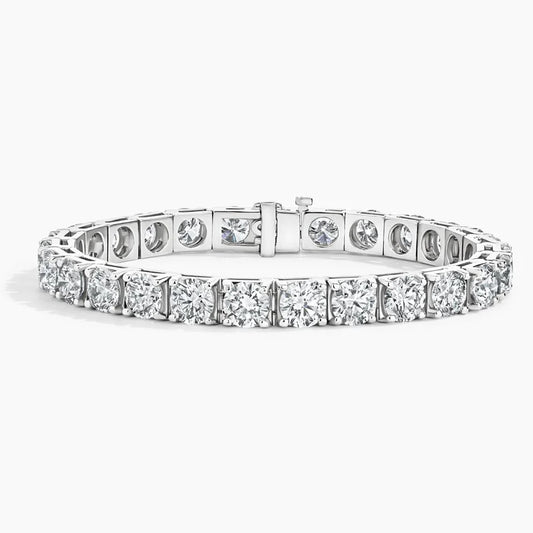
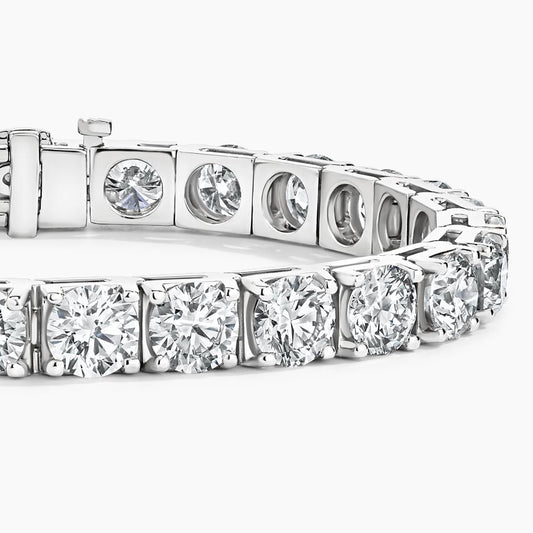
Round Tennis Lab Diamond Bracelet (27 ct. tw.) 18K Gold
Round Tennis Lab Diamond Bracelet (27 ct. tw.) 18K Gold
Dhs. 37,460.00 AED

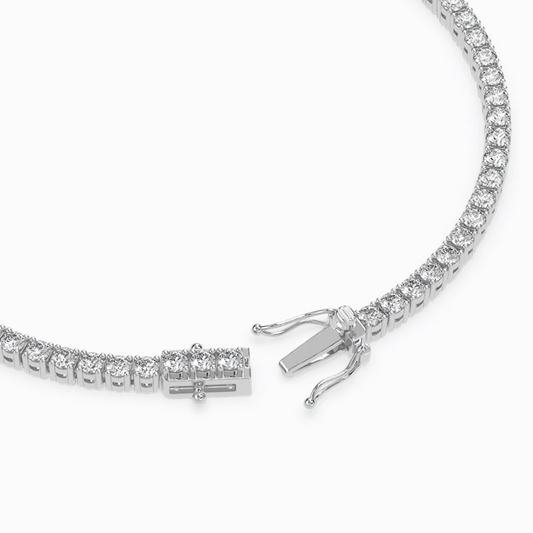
Round Tennis Lab Diamond Bracelet (5 ct. tw.) 18K Gold
Round Tennis Lab Diamond Bracelet (5 ct. tw. ) 18K Gold
Dhs. 10,850.00 AED


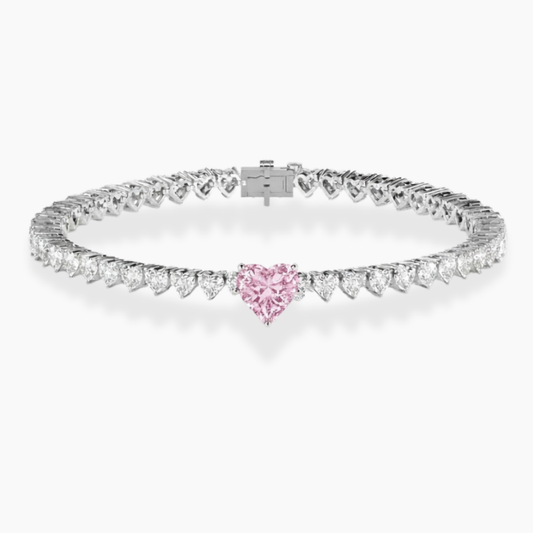
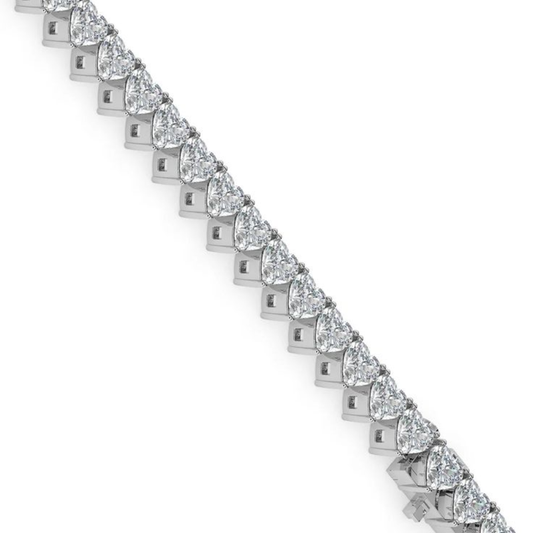
Pink Heart Tennis Lab Diamond Bracelet (5 ct. tw.) 18K White Gold
Pink Heart Tennis Lab Diamond Bracelet (5 ct. tw.) 18K White Gold
Dhs. 11,250.00 AED
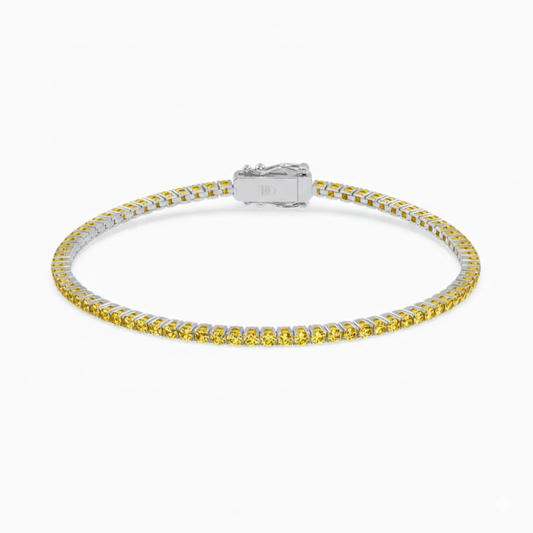
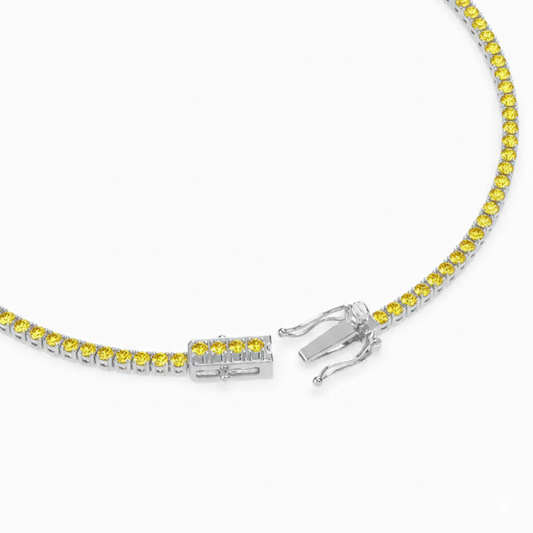
Fancy Yellow Round Tennis Lab Diamond Bracelet (5 ct. tw.) 18K Gold
Yellow Round Tennis Lab Diamond Bracelet (5 ct. tw.) 18K White Gold
Dhs. 11,250.00 AED
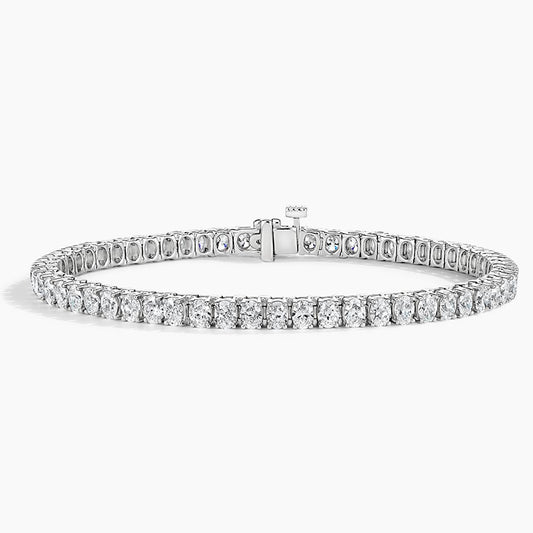
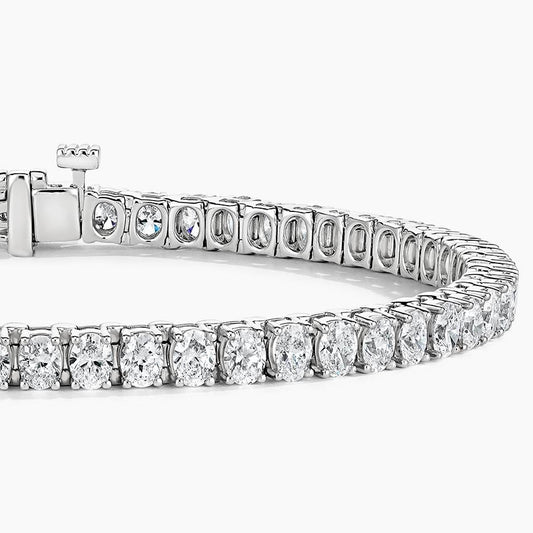
Oval Tennis Lab Diamond Bracelet (8 ct. tw.) 18K Gold
Oval Tennis Lab Diamond Bracelet (8 ct. tw.) 18K Gold
Dhs. 14,325.00 AED
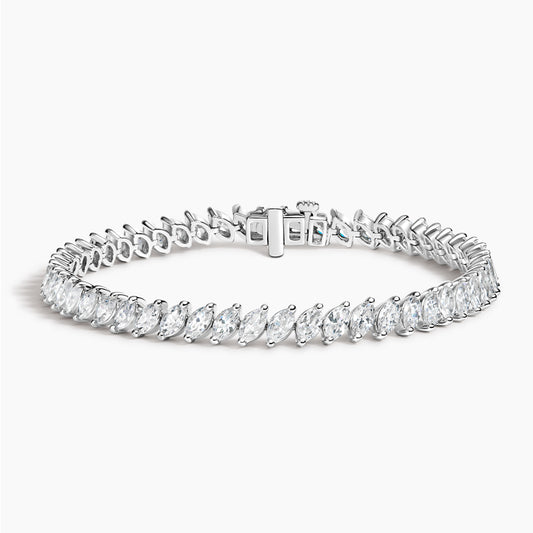
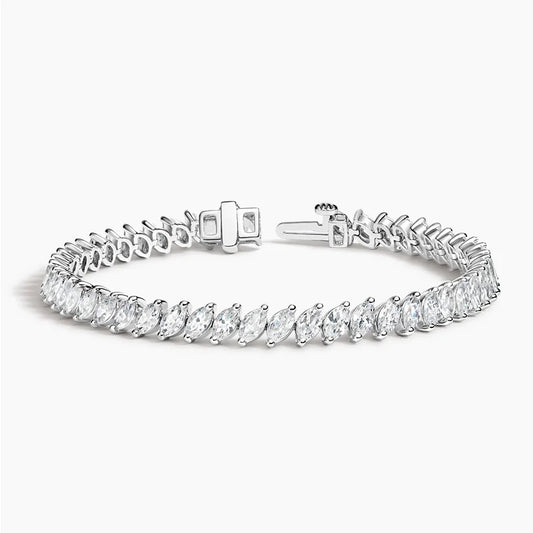
Marquise Tennis Lab Diamond Bracelet (8 ct. tw.) 18K Gold
Marquise Tennis Lab Diamond Bracelet (8 ct. tw.) 18K Gold
Dhs. 14,325.00 AED


Emerald Tennis Lab Diamond Bracelet (9 ct. tw.) 18K Gold
Emerald Tennis Lab Diamond Bracelet (9 ct. tw.) 18K Gold
Dhs. 15,795.00 AED


