


We've Got You Covered

Free Shipping
Enjoy free shipping anywhere across the Middle East.

Certification
We provide You with an IGI or GIA-certified and traceable origin of diamonds.

24/7 Support
7-day support for questions, concerns, or consultations.

Customization
Free customization for any jewellery—just share your idea.

Free Resize
One free ring resizing available within 60 days of purchase.

Free Engraving
We provide free engraving to make your ring truly yours.
Natural Diamonds' Grading and Certification

All The Diamond Oasis natural diamonds above 0.5 ct are independently graded and certified by GIA. IGI and HRD certificates are also available and can be ordered upon request.
Carat
- Carat weight has the most influence on diamond value. The weight or size of a diamond is measured in carats (ct.).
- Diamonds of different shapes may appear different sizes for the same carat weight.
- One carat weighs 1/5 of a gram and is divided into 100 points. For example:
0.75 carat = 75 points 1/2 carat = 50 points 1/4 carat = 25 points
- When diamonds are mined, large gems are discovered much less frequently than small ones. This rarity makes large diamonds much more valuable.
- Diamond prices rise exponentially with carat weight. So, a 2-carat diamond of a given quality is always worth more than two 1-carat diamonds of the same quality.
Color
- Diamonds are graded on a color scale from D (colorless) to Z (light yellow or brown). G–H diamonds fall within the near-colorless range, offering a bright, white appearance with only very subtle warmth that is typically difficult to detect once set in jewelry.
- Fancy colored diamonds are those with hues other than yellow or brown, and they are graded separately.
- In a controlled grading environment, each diamond is compared with established master stones to assess its color accurately. Several GIA gemologists review the diamond independently, supported by advanced grading technology, and a final color grade is assigned only once a consistent assessment has been reached..
Clarity
- Clarity evaluates a diamond's freedom from internal and external characteristics that occurred during formation, polishing, or wear.
- Clarity characteristics include inclusions (internal) and blemishes (external).
- Grading the clarity involves observing the number, nature, size, and position of these characteristics.
- Under standardized viewing conditions and 10× magnification, multiple GIA graders independently assess each diamond’s clarity. They first check for any treatments or surface coatings, then evaluate and record its clarity characteristics, polish, and symmetry. Relevant inclusions and blemishes are plotted on a diagram that corresponds to the diamond’s shape and faceting style.
Cut
- Cut quality significantly affects a diamond's appearance, including its brilliance, dispersion (fire), contrast patterns, and scintillation (sparkle).
- Man-made factors such as planning, proportions, cutting precision, and finishing details determine the diamond's visual properties.
- GIA evaluates cut using its proprietary grading system, which combines precise mathematical measurements with extensive light-performance research. The system was developed using more than one million modeled proportion combinations and refined through over 70,000 visual observations of nearly 2,300 diamonds to ensure the grading metrics reflect how a diamond actually performs.
Other Rings We Think You'll Love
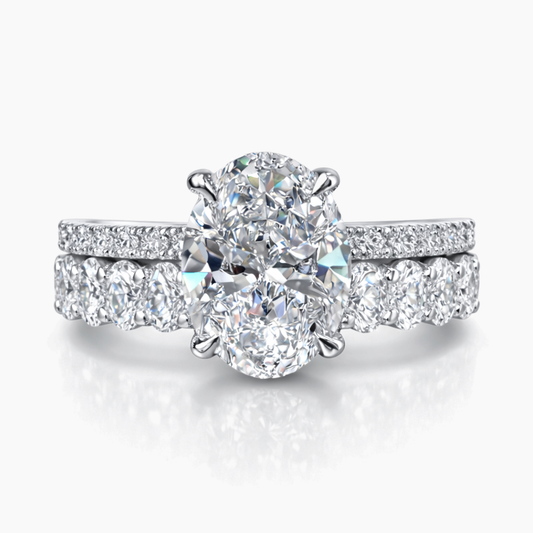
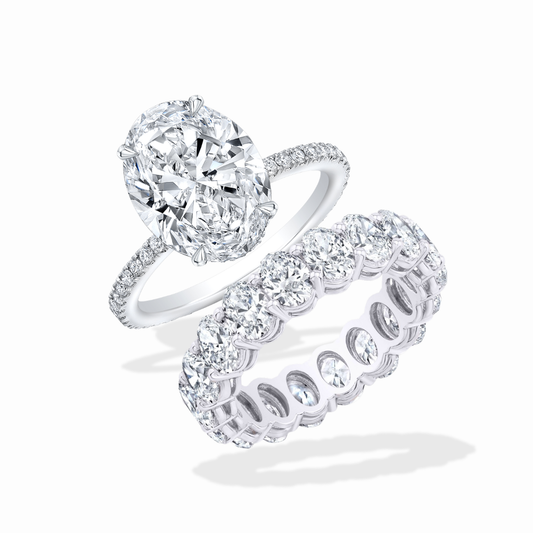
Oval Pave and Oval Eternity Lab Diamond Ring Set in 18K Gold
Oval Pave and Oval Eternity Ring Set | 18K White Gold | Lab Grown Diamond | Oval | From 3 ct. tw.
Dhs. 9,650.00 AED
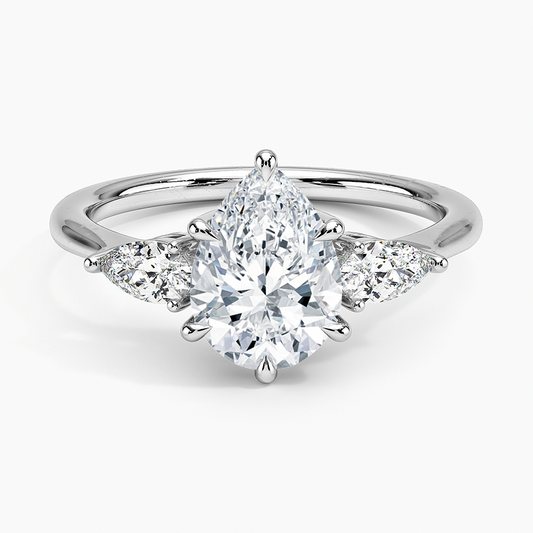
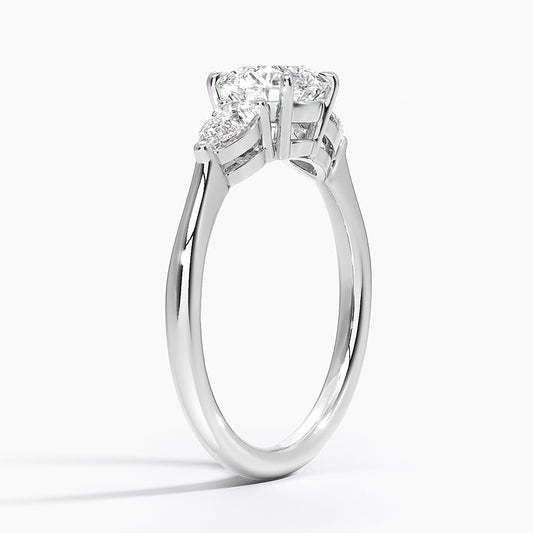
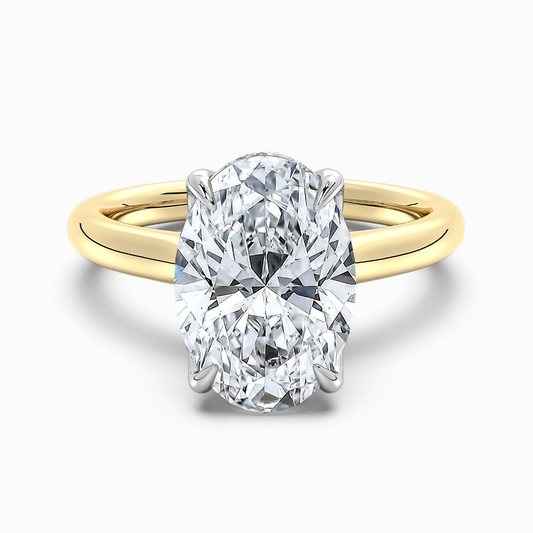
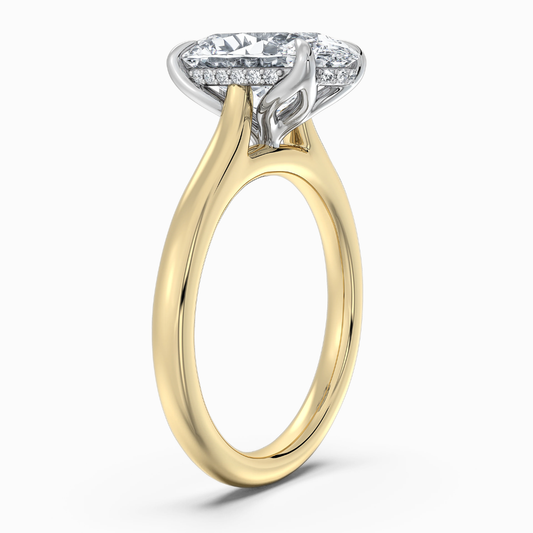
Solitaire Two Tone Tulip Petals Hidden Halo Cathedral Bridge Lab Grown Diamond Engagement Ring in 18K Gold – Oval
Solitaire Two Tone Tulip Petals Hidden Halo Cathedral Bridge Ring | 18K Yellow Gold | Lab Grown Diamond | Oval | From 1 ct
Dhs. 4,450.00 AED
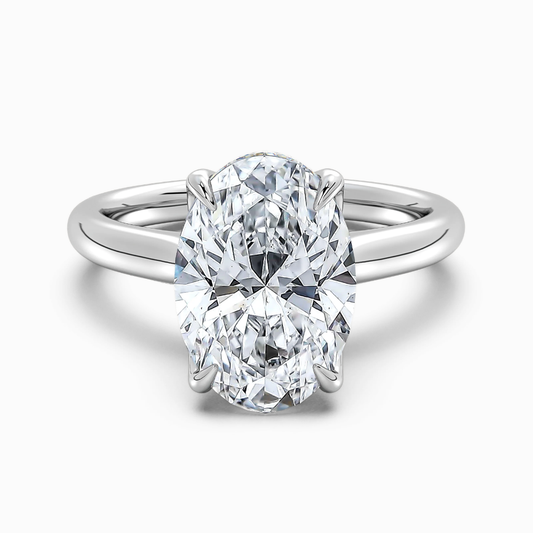
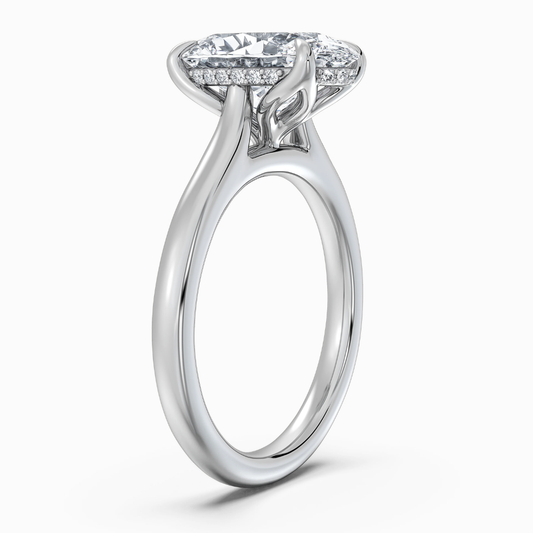
Solitaire Tulip Petals Hidden Halo Cathedral Bridge Lab Grown Diamond Engagement Ring in 18K Gold – Oval
Solitaire Tulip Petals Hidden Halo Cathedral Bridge Ring | 18K White Gold | Lab Grown Diamond | Oval | From 1 ct
Dhs. 4,450.00 AED
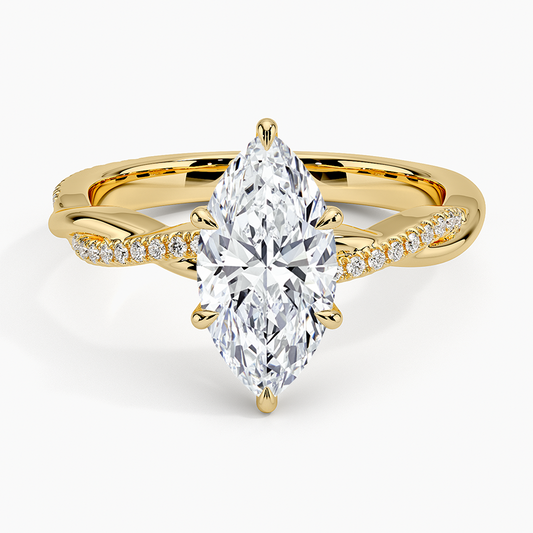
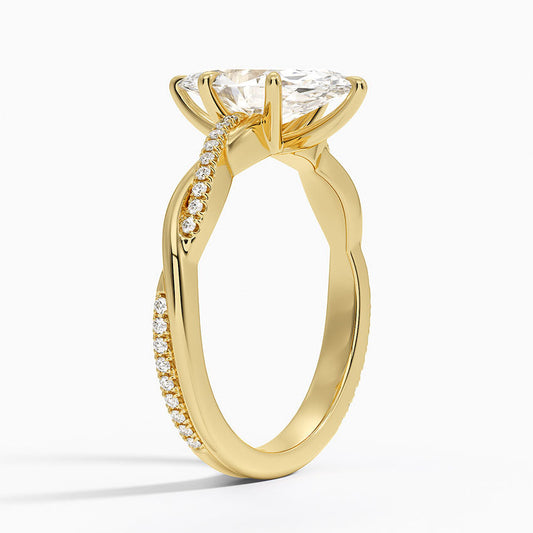
Twisted Ring
Twisted Ring | 18K Yellow Gold | Lab Grown Diamond | Marquise | From 1 ct
Dhs. 4,400.00 AED
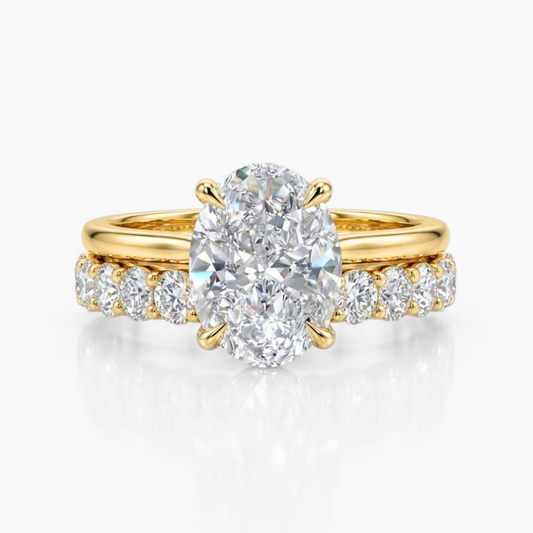
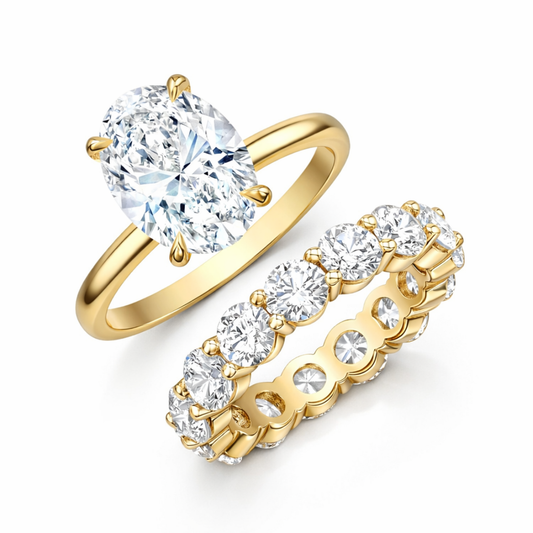
Oval Solitaire and Round Eternity Lab Diamond Ring Set in 18K Gold
Oval Solitaire and Round Eternity Ring Set | 18K Yellow Gold | Lab Grown Diamond | Oval | From 3 ct. tw.
Dhs. 9,300.00 AED
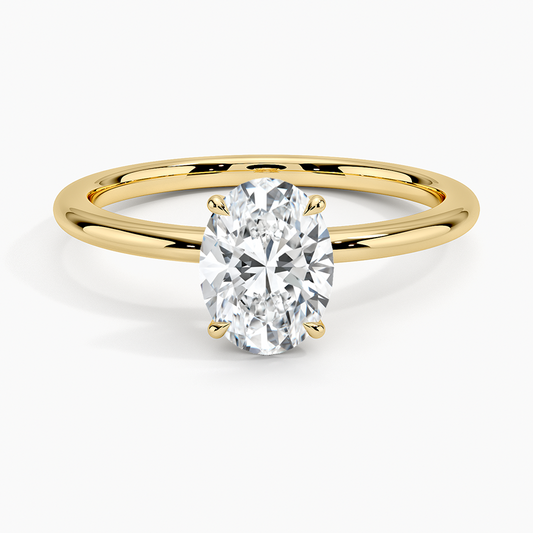
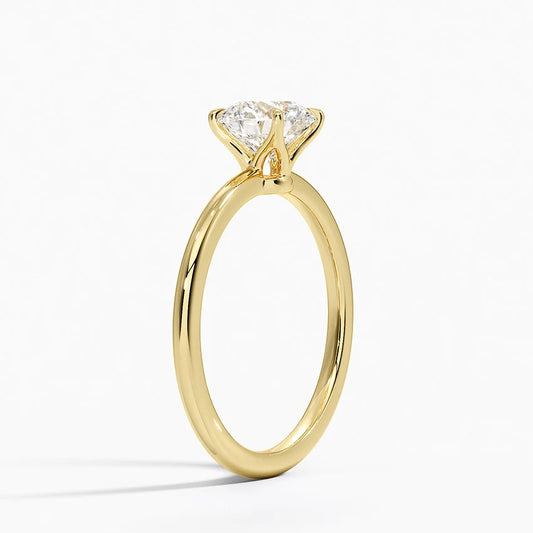
Solitaire Ring
Solitaire Ring | 18K Yellow Gold | Lab Grown Diamond | Oval | From 1 ct
Dhs. 4,000.00 AED
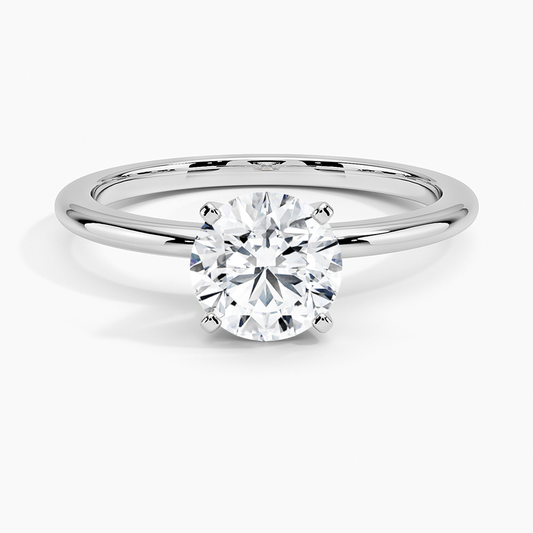
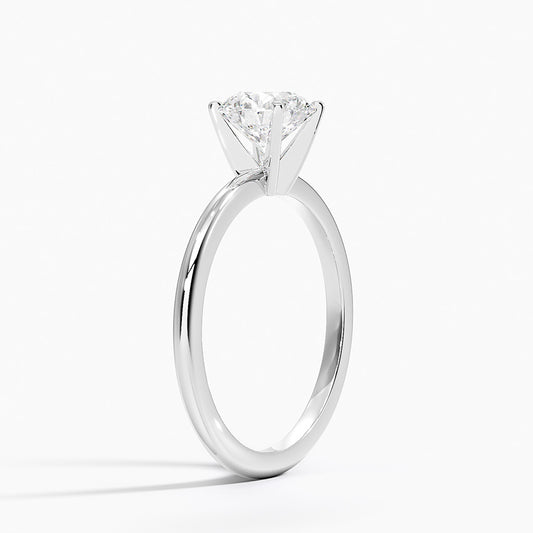
Solitaire Ring
Solitaire Ring | 18K White Gold | Lab Grown Diamond | Round | From 1 ct
Dhs. 4,000.00 AED


