


We've Got You Covered

Free Shipping
Enjoy free shipping anywhere across the Middle East.

Certification
We provide You with a certified origin of diamonds.

24/7 Support
7-day support for questions, concerns, or consultations.

Customization
Free customization for any jewellery—just share your idea.
How Our Diamonds are Graded:
4 C's of a Diamond

Jewellery, including bracelets, bands, necklaces and earrings, may be certified as a complete jewellery piece, by IGI, SGL, IDL, IDT or HRD institutions. Engagement rings with a centre diamond of 0.5 ct or above include an individual IGI or GIA certificate.
Carat
- Carat weight has the most influence on diamond value. The weight or size of a diamond is measured in carats (ct.).
- Diamonds of different shapes may appear different sizes for the same carat weight.
- One carat weighs 1/5 of a gram and is divided into 100 points. For example:
0.75 carat = 75 points 1/2 carat = 50 points 1/4 carat = 25 points
- When diamonds are mined, large gems are discovered much less frequently than small ones. This rarity makes large diamonds much more valuable.
- Diamond prices rise exponentially with carat weight. So, a 2-carat diamond of a given quality is always worth more than two 1-carat diamonds of the same quality.
Color
All our diamonds are D-F color - COLORLESS
- Diamonds are graded on a scale from colorless to light yellow or light brown. D-F falls within the colorless range, which is considered the rarest and most expensive.
- Fancy colored diamonds are those with hues other than yellow or brown, and they are graded separately.
- The color of diamonds is determined by comparing them to a master set of stones ranging from D (colorless) to Z (most yellow/brown).
- IGI assigns color grades for diamonds in the D-Z range by viewing them through the pavilion in a neutral environment to ensure accuracy.
Clarity
All our diamonds are VS1 clarity. - NO INCLUSIONS CAN BE SEEN WITH A HUMAN EYE
- Clarity evaluates a diamond's freedom from internal and external characteristics that occurred during formation, polishing, or wear.
- Clarity characteristics include inclusions (internal) and blemishes (external).
- Grading the clarity involves observing the number, nature, size, and position of these characteristics.
- IGI grading reports include diagrams showing clarity characteristics, marked in red for internal and green for external features.
Cut
All our diamonds are Excellent to Very Good cut.
- Cut quality significantly affects a diamond's appearance, including its brilliance, dispersion (fire), contrast patterns, and scintillation (sparkle).
- Man-made factors such as planning, proportions, cutting precision, and finishing details determine the diamond's visual properties.
- Diamond faceting has evolved over time, with different shapes and cutting styles available.
Other Necklaces You Might Like
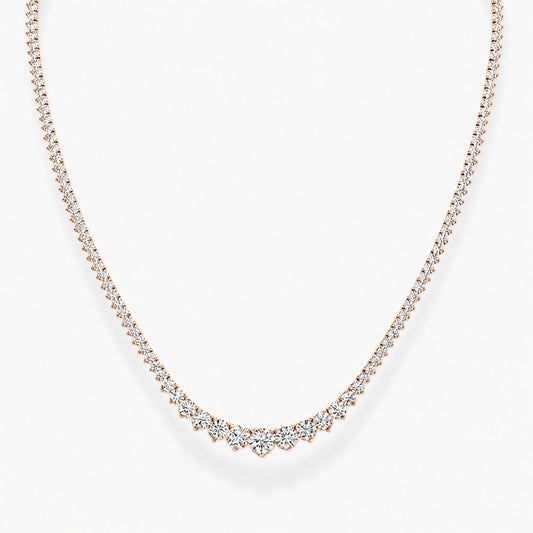
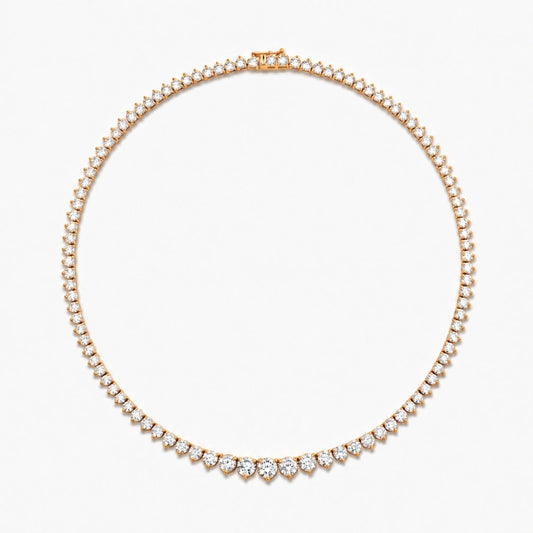
Tennis Graduated Riviera Lab Grown Diamond Necklace 18K Gold | 3 Prongs | 16.5 in ∼ 42.5 cm | From 7 to 14 ct
Tennis Graduated Riviera Lab Grown Diamond Necklace 18K Gold | 3 Prongs | 16.5 in ∼ 42.5 cm | From 7 to 14 carat
Dhs. 16,800.00 AED
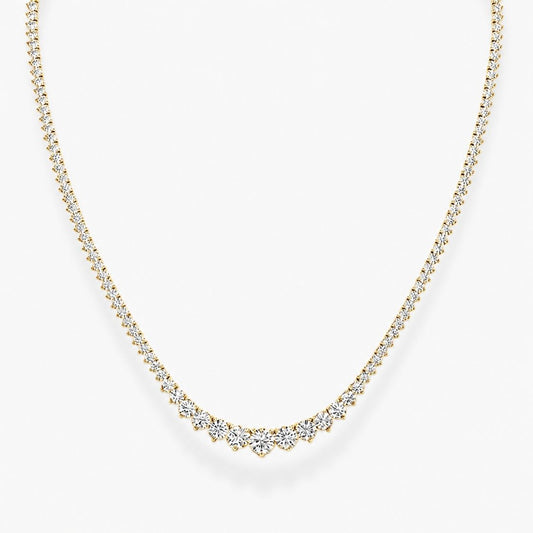
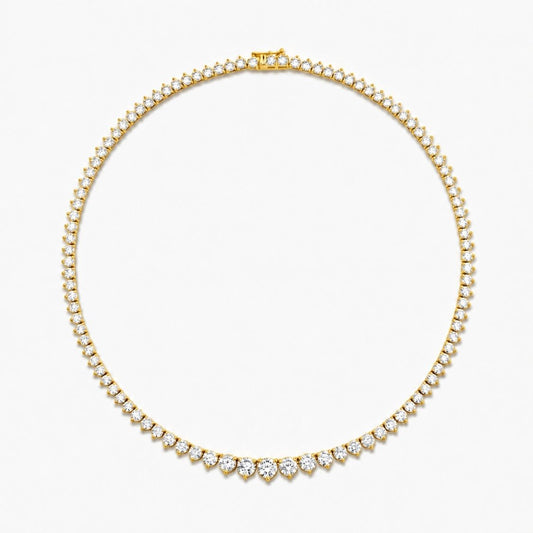
Tennis Graduated Riviera Lab Grown Diamond Necklace 18K Gold | 3 Prongs | 16.5 in ∼ 42.5 cm | From 7 to 14 ct
Tennis Graduated Riviera Lab Grown Diamond Necklace 18K Gold | 3 Prongs | 16.5 in ∼ 42.5 cm | From 7 to 14 carat
Dhs. 16,800.00 AED
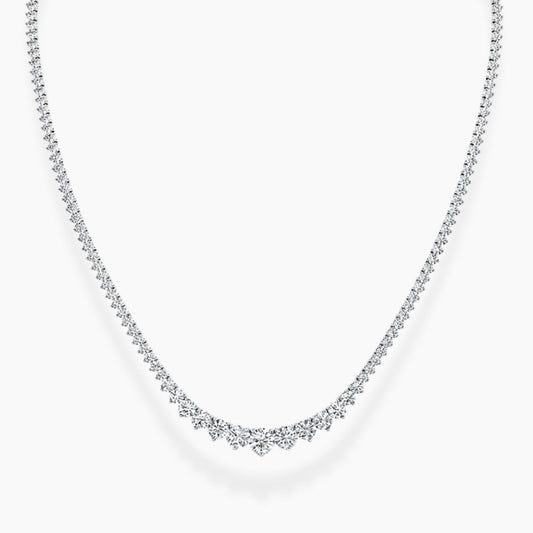
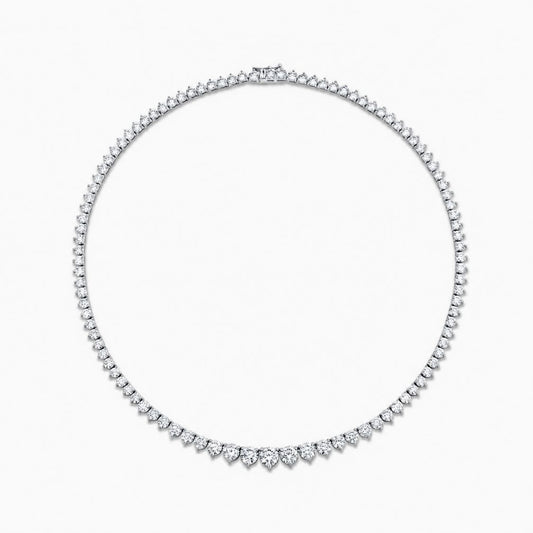
Tennis Graduated Riviera Lab Grown Diamond Necklace 18K Gold | 3 Prongs | 16.5 in ∼ 42.5 cm | From 7 to 14 ct
Tennis Graduated Riviera Lab Grown Diamond Necklace 18K Gold | 3 Prongs | 16.5 in ∼ 42.5 cm | From 7 to 14 carat
Dhs. 16,800.00 AED
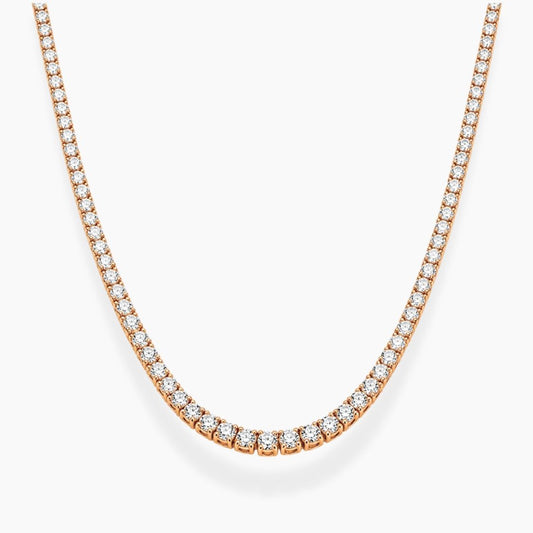
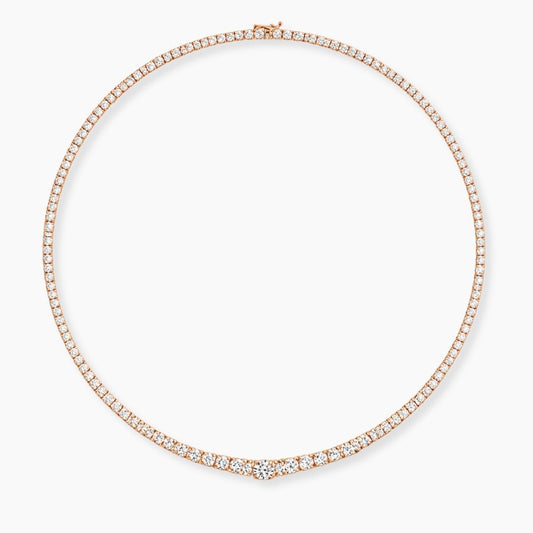
Tennis Graduated Lab Grown Diamond Necklace 18K Gold | 4 Prongs | 16.5 in ∼ 42.5 cm | From 7 to 14 ct
Tennis Graduated Lab Grown Diamond Necklace 18K Gold | 4 Prongs | 16.5 in ∼ 42.5 cm | From 7 to 14 carat
Dhs. 16,800.00 AED
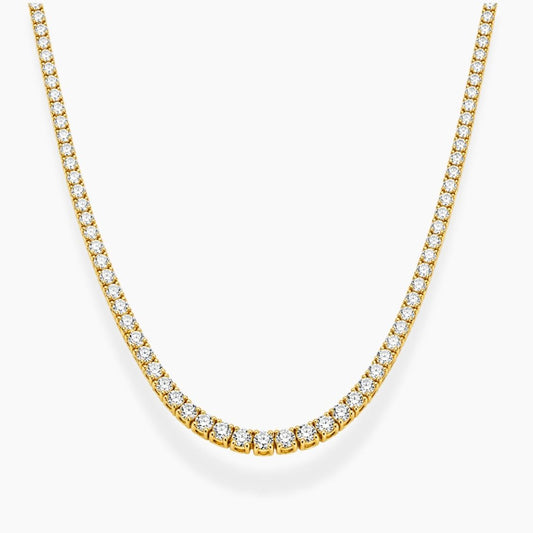
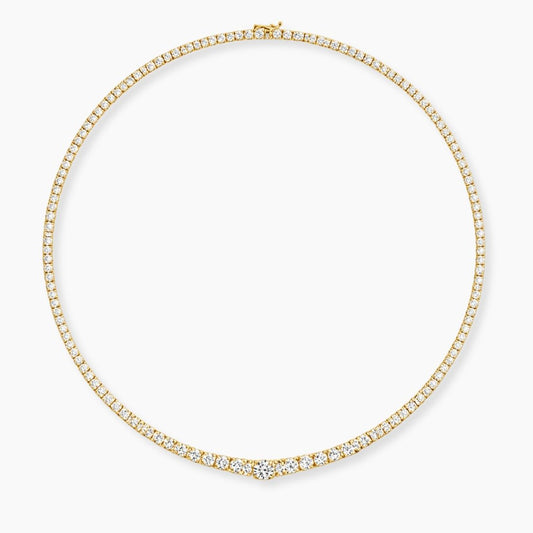
Tennis Graduated Lab Grown Diamond Necklace 18K Gold | 4 Prongs | 16.5 in ∼ 42.5 cm | From 7 to 14 ct
Tennis Graduated Lab Grown Diamond Necklace 18K Gold | 4 Prongs | 16.5 in ∼ 42.5 cm | From 7 to 14 carat
Dhs. 16,800.00 AED
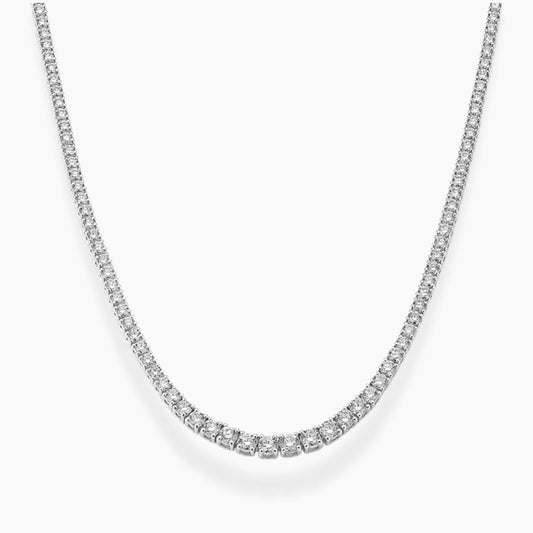
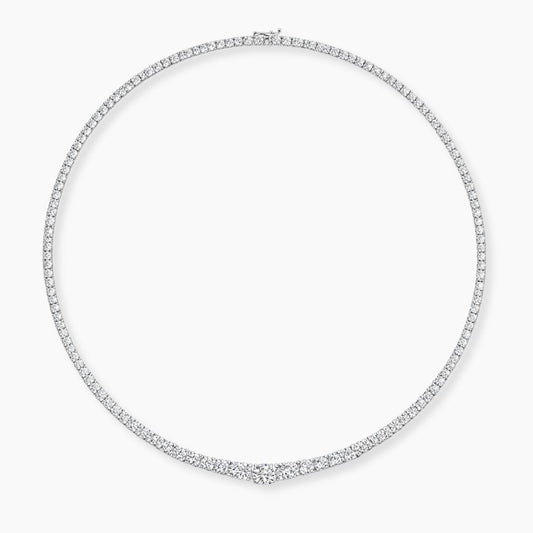
Tennis Graduated Lab Grown Diamond Necklace 18K Gold | 4 Prongs | 16.5 in ∼ 42.5 cm | From 7 to 14 ct
Tennis Graduated Lab Grown Diamond Necklace 18K Gold | 4 Prongs | 16.5 in ∼ 42.5 cm | From 7 to 14 carat
Dhs. 16,800.00 AED
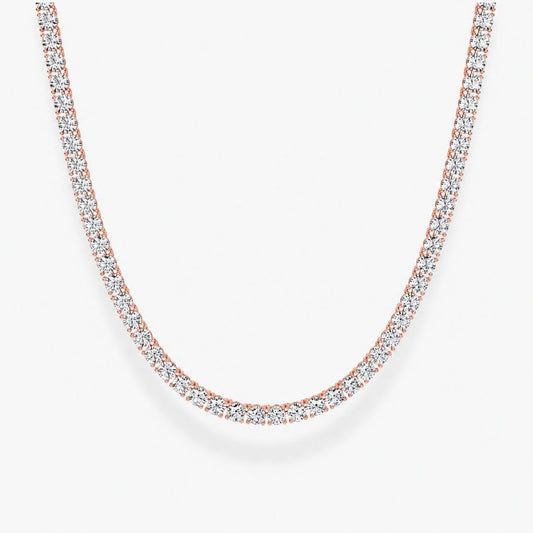
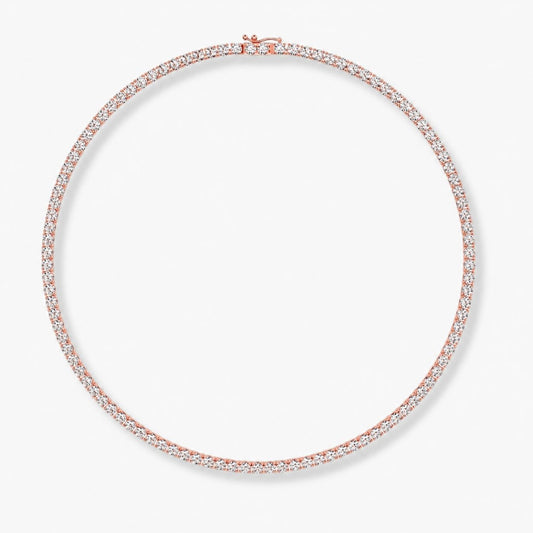
Tennis Classic Lab Grown Diamond Necklace 18K Gold | 16.5 in ∼ 42.5 cm | From 7 to 25 carat
Tennis Classic Lab Grown Diamond Necklace 18K Gold | 16.5 in ∼ 42.5 cm | From 7 to 25 ct
Dhs. 16,800.00 AED
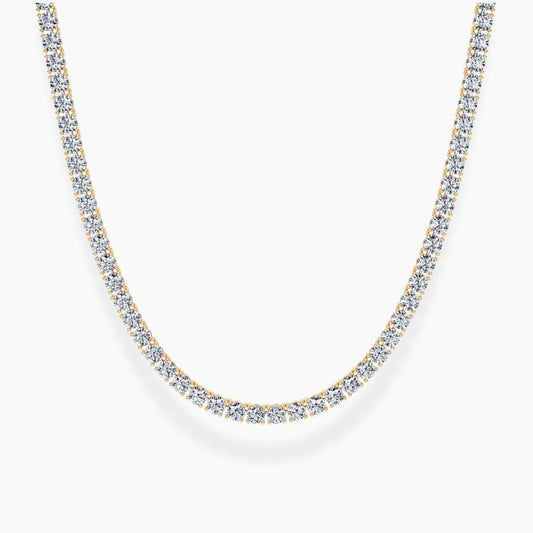
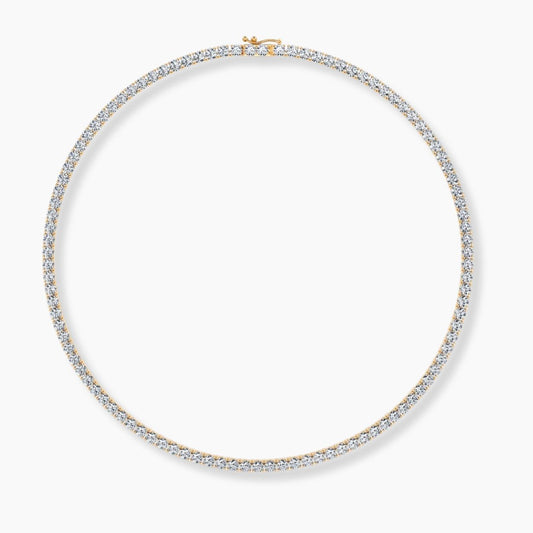
Tennis Classic Lab Grown Diamond Necklace 18K Gold | 16.5 in ∼ 42.5 cm | From 7 to 25 carat
Tennis Classic Lab Grown Diamond Necklace 18K Gold | 16.5 in ∼ 42.5 cm | From 7 to 25 ct
Dhs. 16,800.00 AED


