Round brilliant diamond held by tweezers under magnifying glass showing diamond inspection and grading

Not sure what cut, color, clarity, and carat actually mean when buying a diamond — or which one matters most for your budget? This guide breaks it all down.


Round brilliant diamond held by tweezers under magnifying glass showing diamond inspection and grading

Not sure what cut, color, clarity, and carat actually mean when buying a diamond — or which one matters most for your budget? This guide breaks it all down.


1. What Are the 4 Cs of Diamonds?

The 4 Cs stand for Cut, Color, Clarity, and Carat. They were developed by the Gemological Institute of America (GIA) as a universal grading system — a way to objectively describe and compare diamonds regardless of where in the world you're buying. Today, the same framework is used by the International Gemological Institute (IGI), which is the leading certification body for lab-grown diamonds worldwide.

Here's what makes this system so useful: it applies equally to both lab-grown and natural diamonds. A lab-grown diamond is chemically, physically, and optically identical to a natural one — the 4 Cs grade them exactly the same way. The difference is origin and price, not quality. Our lab-grown diamonds come certified by IGI. Natural diamonds, available to order on request, come certified by GIA — the two most trusted grading institutions in the industry.

The 4 Cs don't work in isolation. They interact with each other, and knowing how to balance them is what separates a smart buyer from someone who overspends on paper grades that make no visible difference.


The 4 Cs of Diamonds: Carat, Cut, Color, Clarity

2. Diamond Carat — Does a Higher Carat Mean a Bigger Diamond?

A carat is simply a unit of weight: one carat equals 0.2 grams. What it doesn't directly tell you is how large the diamond will look on a finger — that's determined by a combination of carat weight, cut quality, and shape.

Different shapes look dramatically different sizes at the exact same carat weight:

  • An oval diamond typically faces up 10–15% larger than a round diamond of the same weight
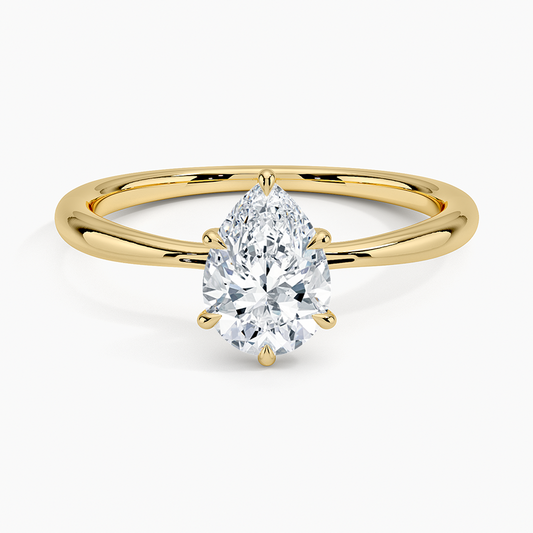
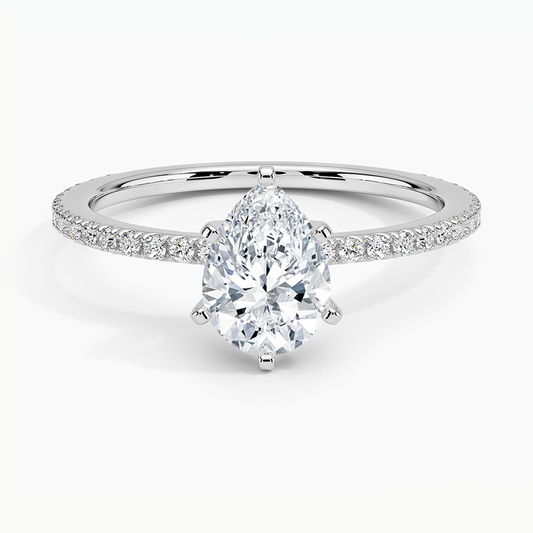
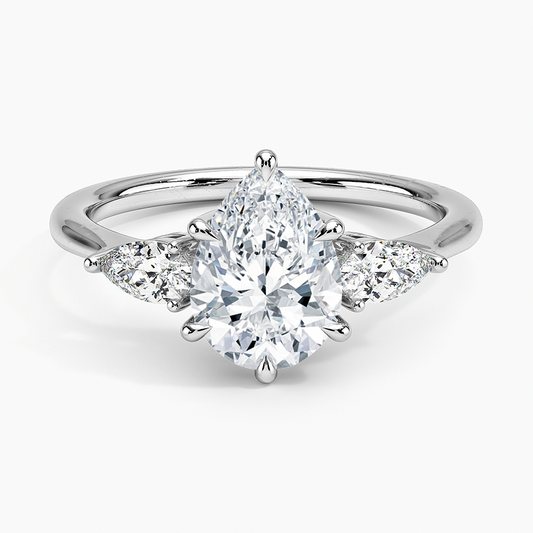
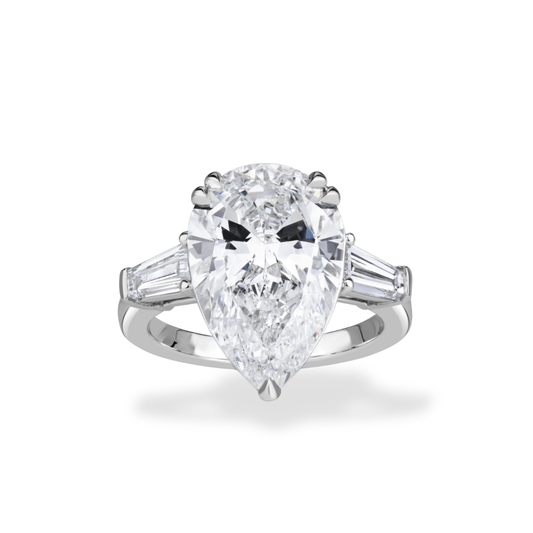
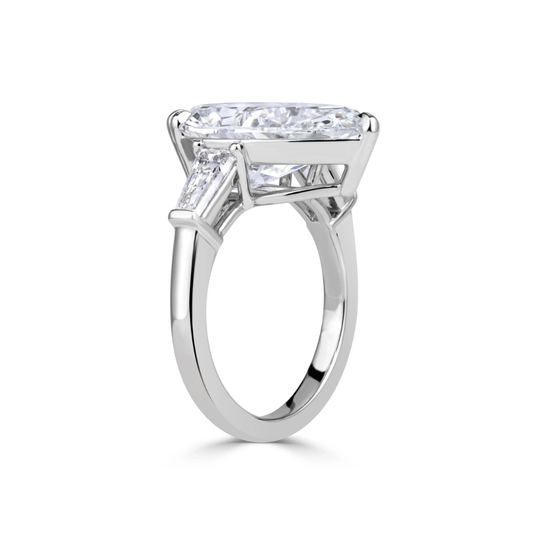
  • Pear shaped and marquise diamonds — both elongated shapes — can look nearly 20% larger than a round at the same carat weight
  • A well-cut diamond can also appear larger than a poorly cut stone of identical weight, because light return affects perceived size


Carat weight also has price jump points — thresholds where cost increases sharply. A 1.00ct diamond is priced notably higher than a 0.95ct, even though the visible size difference is nearly imperceptible. Buying just below these thresholds (0.90ct instead of 1.00ct, for example) is one of the simplest ways to stretch your budget without sacrificing the look you want.

For lab-grown diamonds, carat weight is significantly more accessible — you can get a much larger stone for the same budget compared to natural. This is one of the most compelling reasons our customers choose lab-grown.


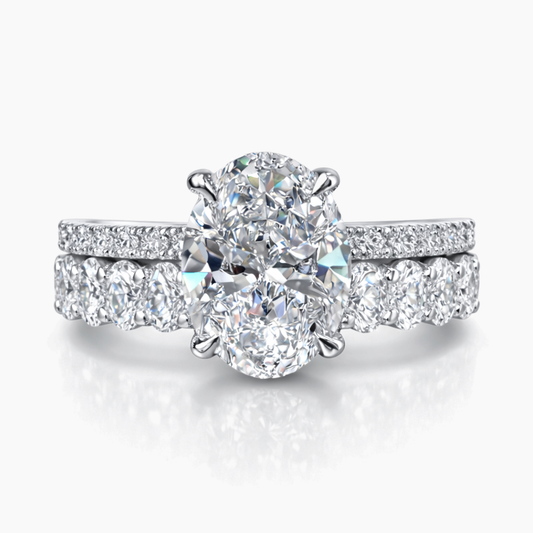
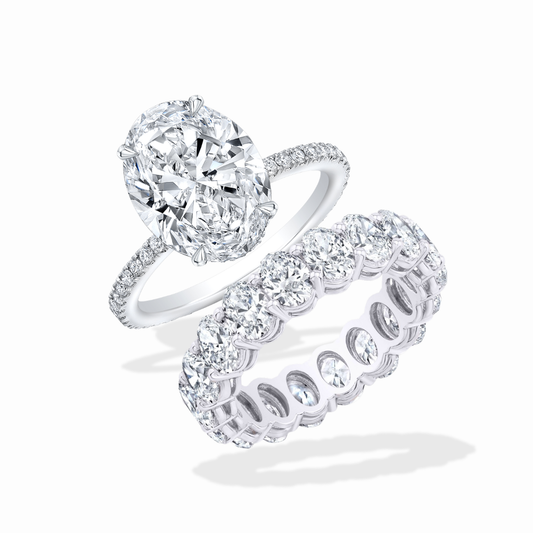
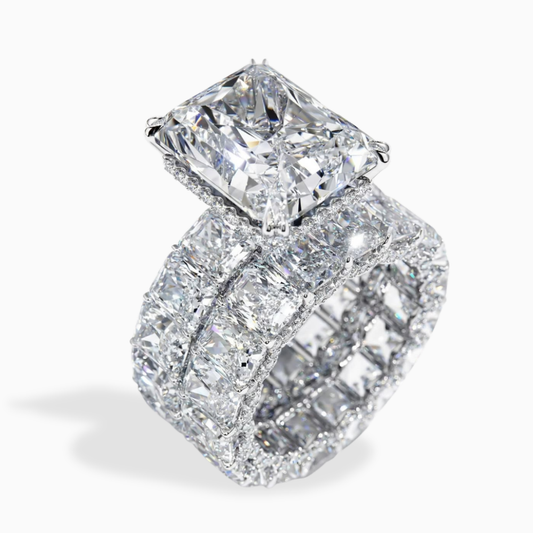
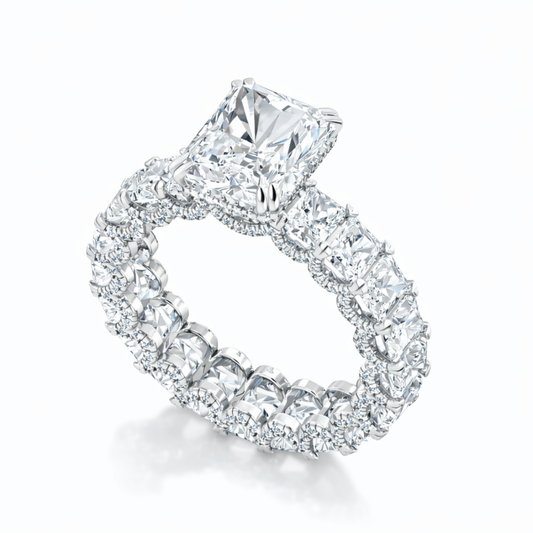
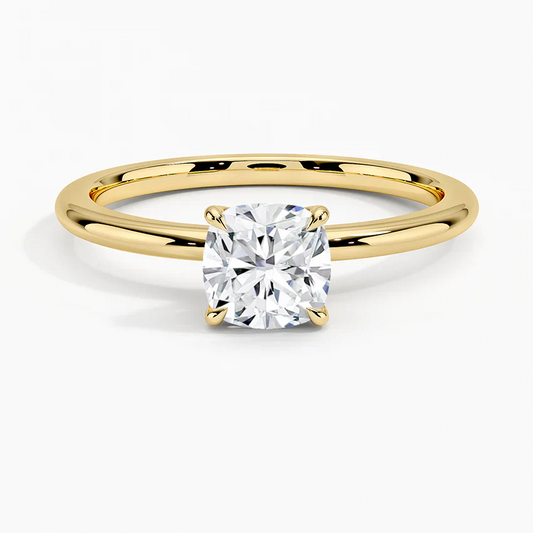
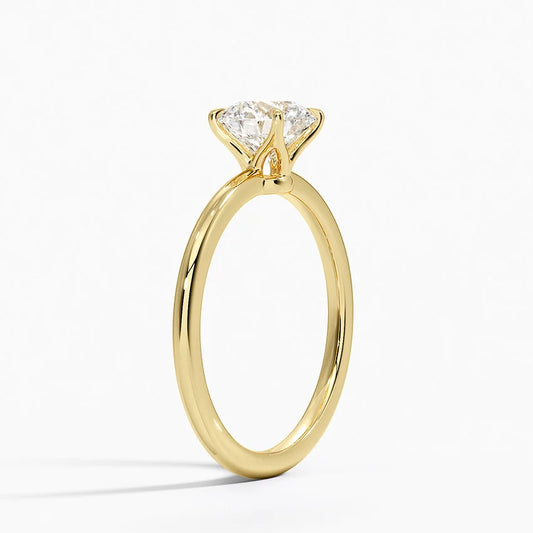
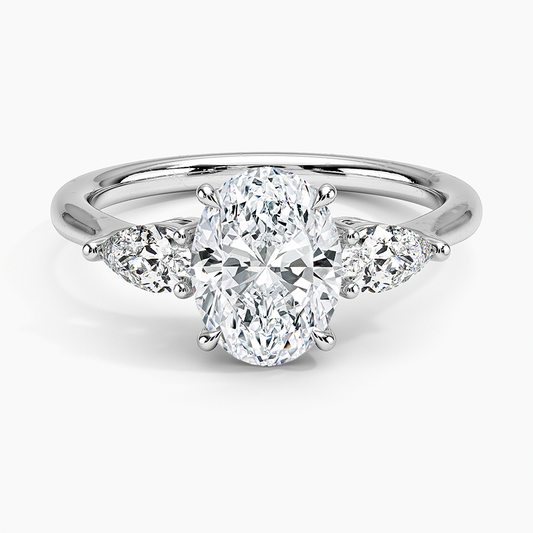
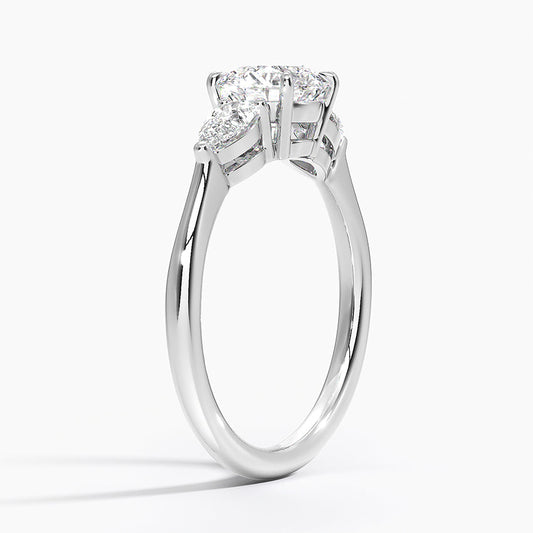
Discover Ring Styles

1_1dd929c3-4fee-4d6f-abd7-d242ae94d5a7
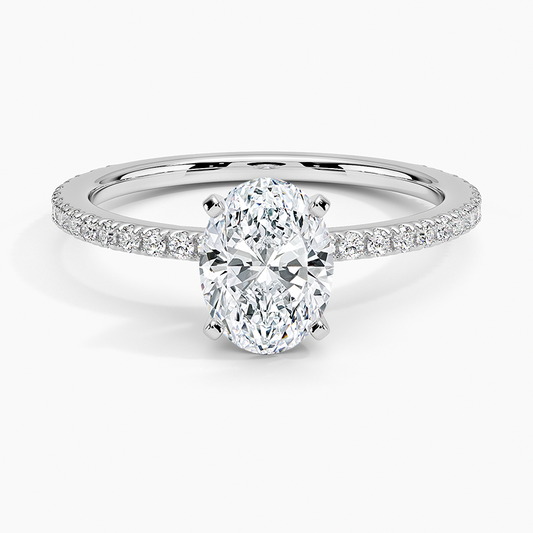
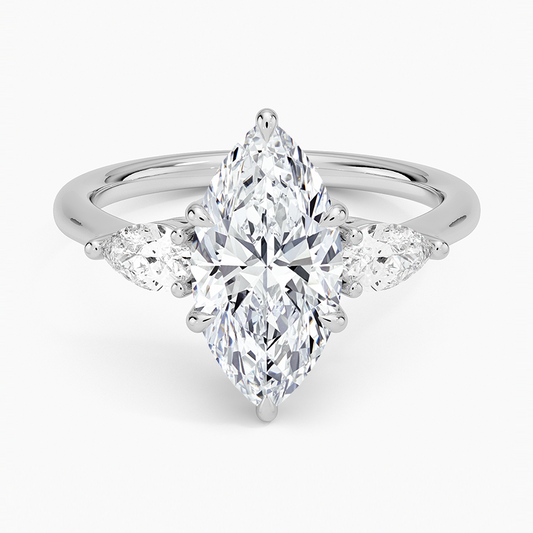
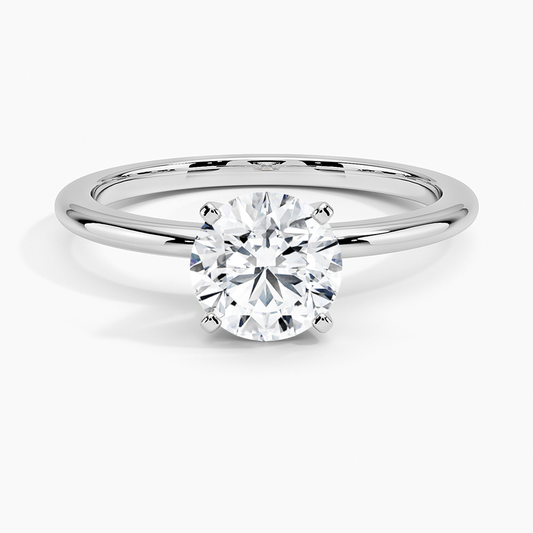
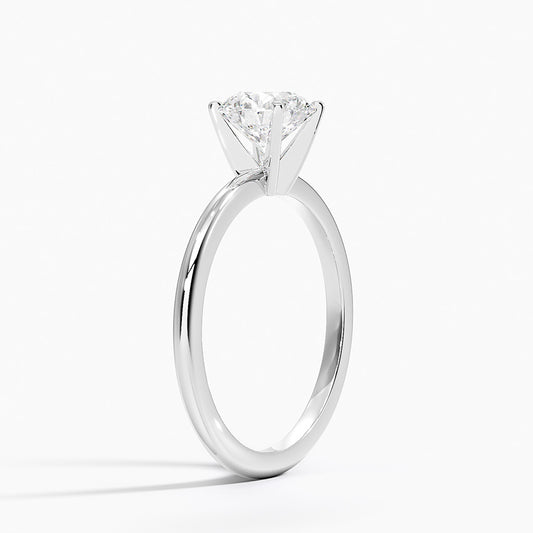
SOLITAIRE
2_782855c8-92db-4332-94e9-13d042cff6b7
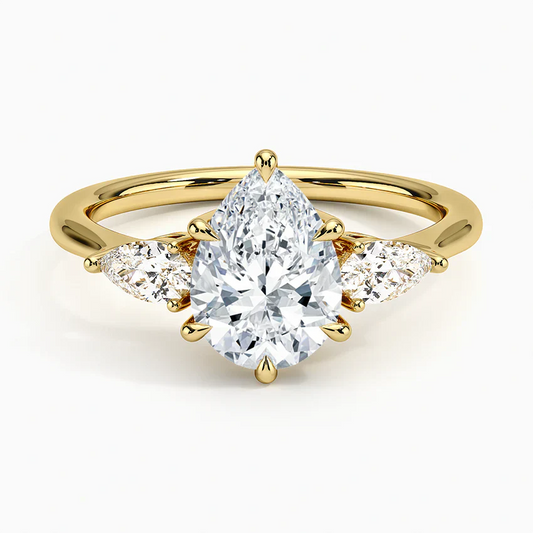
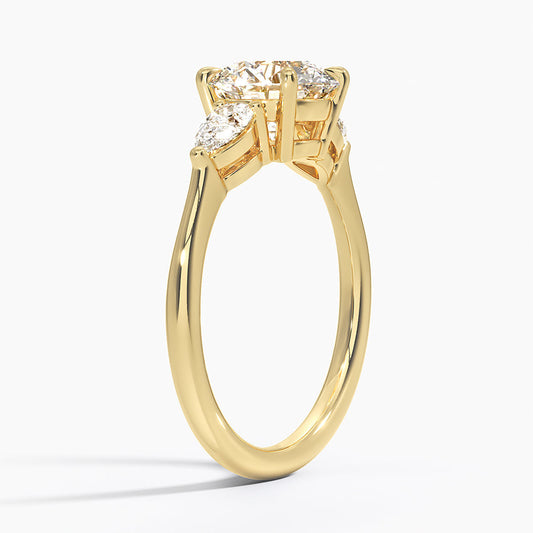
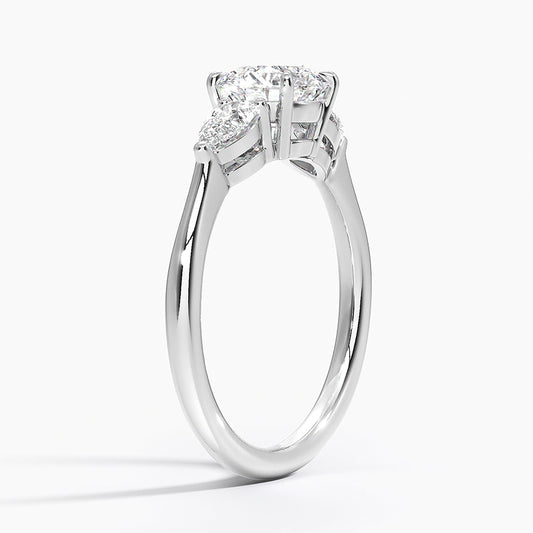
TRILOGY
3_5fb16331-ec9d-40d3-ad89-366b6b035293
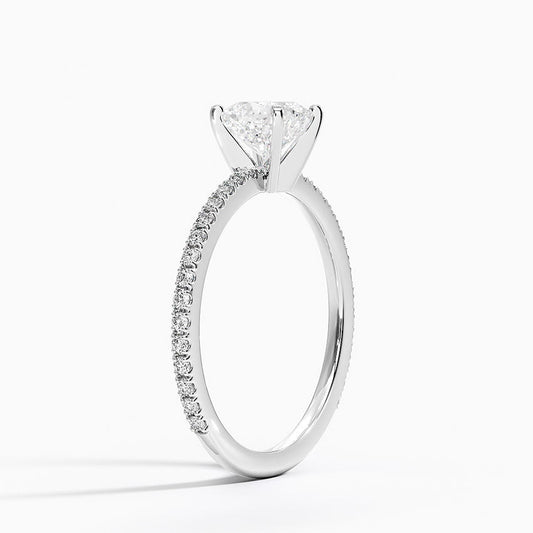
PAVE
4_bba93a30-62af-4317-a80d-6c2e3ca85258
ACCENTS
5_6cbcab3c-2754-42af-b551-68827c828d0d
HALO
6_6d0e839d-649b-4b66-9ae1-816ce3438080
TOI ET MOI
7_64aed733-e3d7-4050-af70-96af2a626ec8
BEZEL
8_67126a44-c213-42c6-a1a9-6fdac0ae6acd
EAST-WEST
9_cc2af850-8dda-4b59-a313-83d17b047fd5
CURVED

3. Diamond Cut — Why It's the Most Important?

If you could only focus on one C, make it this one. Cut is widely considered the most critical factor — for both lab-grown and natural diamonds — and also the most misunderstood.

Cut doesn't refer to the shape of a diamond (round, oval, cushion — that's a separate decision). Cut refers to how well a diamond has been crafted from the rough stone — specifically, how precisely its facets have been angled and polished to interact with light.

  • A well-cut diamond takes light in through the top, bounces it around the interior like a hall of mirrors, and fires it back out in an explosion of brilliance and sparkle
  • A poorly cut diamond — even one with perfect color and clarity — will look dull, glassy, and flat. Light leaks out the sides and bottom instead of returning to your eye

Both GIA and IGI grade cut on the same scale:


Poor → Fair → Good → Very Good → Excellent


For round cut diamonds, always aim for Excellent. For fancy shapes like oval, cushion, or radiant, cut is graded differently — but proportions still matter enormously.

This is one C where there is no savings hack. Never compromise on cut. It is the diamond's personality — the difference between a stone that catches light from across the room and one that simply doesn't.


The 4 Cs of Diamonds: Carat, Cut, Color, Clarity

4. Diamond Color: Can You See any Difference?

Diamond color is graded on a scale from D to Z, where D is completely colorless and Z has a noticeable warm yellow tint:

  • D, E, F — Colorless
  • G, H, I, J — Near colorless
  • K and below — Increasingly warm tint


The key insight most guides skip over: D, E, and F are all colorless. To the naked eye, they look identical. You cannot tell the difference between a D and an F on a finger in natural light once the diamond is set. The gap only appears when comparing stones side by side under a gemologist's loupe in a lab setting.

For lab-grown diamonds certified by IGI, we recommend F color as your starting point — it is genuinely colorless, looks crisp and bright in any setting, and because lab-grown pricing is far more accessible than natural, going F doesn't require a significant budget stretch. This is the grade we stand behind.

For natural diamonds certified by GIA, the story is a little different. The price jumps between color grades are steep — and because of that, there is more room to be flexible depending on your setting and personal preference. An F is still our recommendation for a colorless look, but a G or H in the right setting can be just as beautiful at a noticeably lower price. Your metal choice plays a big role here:

  • White gold — stay at F–G for a crisp, icy look
  • Yellow gold — the warm metal reflects into the stone, making H or even I look completely white, with meaningful savings.

Move the slider to explore each color grade — from warm tints to absolute colorlessness.

5. Diamond Clarity: Which one is Eye-Clean?

Clarity measures the presence or absence of inclusions — tiny internal characteristics that formed when the diamond was created under extreme heat and pressure. The full diamond clarity scale runs:

FL → IF → VVS1 → VVS2 → VS1 → VS2 → SI1 → SI2 → I1 → I2 → I3

Here's what each zone means practically:

  • FL–IF (Flawless / Internally Flawless) — Extremely rare, extremely expensive, and visually identical to lower grades to the naked eye
  • VVS1–VVS2 — No inclusions visible without magnification. Premium grade with minimal practical benefit over VS1
  • VS1–VS2 — Eye-clean, beautiful, well-regarded on both IGI and GIA reports. The sweet spot for most buyers
  • SI1 — Can be eye-clean if you view the actual stone. Excellent value if selected carefully
  • I1 and below — Inclusions may be visible to the naked eye. Generally not recommended


VS1 is the clarity grade we consistently recommend — eye-clean, respected on both IGI and GIA grading reports, and the ideal balance of quality and value.

One important exception: emerald cut and asscher cut diamonds have large open facets that work like windows into the stone, making inclusions easier to spot. For these shapes, stick to VS1 or above.


The 4 Cs of Diamonds: Carat, Cut, Color, Clarity

Move the slider to explore each clarity grade and see how inclusions appear under magnification.

The 4 Cs of Diamonds: Carat, Cut, Color, Clarity

6. What Is the Best Combination of the 4 Cs?

Here's the practical framework we give every customer:

  • Cut first — always. Excellent on both IGI and GIA reports is your target. Never go below Very Good
  • Then choose your shaperound, oval, cushion, emerald, radiant, pear, or marquise, heart, princess, asscher — your shape guides proportion and clarity decisions
  • Then set your color floor — F for natural (GIA certified), G–H for lab-grown (IGI certified)
  • Then set your clarity floor — VS1 as your optimal for brilliant cuts; VVS or above for step cuts
  • Then put the rest of your budget into carat weight


The best diamond is not the one with the highest grades across the board. It is the one that looks the most beautiful to you, backed by an honest IGI or GIA certificate, set in a ring you will love wearing every day.


In Summary:

The 4 Cs — Cut, Color, Clarity, and Carat — are the universal standard for evaluating any diamond, whether lab-grown or natural. Cut is the single most important factor affecting how a diamond looks, while Color and Clarity have sweet spots where you get maximum beauty without overpaying for grades your eyes will never see. Master the balance of all four and you'll always get the most beautiful diamond your budget can buy.

Explore our full lab-grown diamond collection — every stone is IGI certified so you know exactly what you are getting. Prefer a natural diamond? Contact us directly and we will guide you to the perfect GIA certified stone. All lab-grown diamonds (0.5 carat or bigger) at The Diamond Oasis are IGI certified. Natural diamonds, available on request, come with GIA certification.


Frequently Asked Questions

What is the most important of the 4 Cs when buying an engagement ring?

Cut, without question. A diamond with an Excellent cut grade will always outperform a higher-graded stone with a poor cut — it will look bigger, brighter, and more alive on the finger. Color and clarity are important, but they affect value on paper more than beauty in real life. Cut is what you actually see and feel every time light hits the ring.

Do lab-grown diamonds have the same 4 Cs as natural diamonds?

Yes — completely. Lab-grown diamonds are chemically, physically, and optically identical to natural diamonds, and they are graded on exactly the same 4 Cs scale. An IGI certified lab-grown diamond with Excellent cut, F color, and VS1 clarity is held to the exact same standard as a GIA certified natural diamond with those same grades. The only difference is origin and price.

What is the best clarity grade for the money?

VS1 is the sweet spot for most buyers — it is eye-clean (no visible inclusions to the naked eye), well-regarded on both IGI and GIA reports, and significantly less expensive than VVS or Flawless grades that look identical in real life. The one exception is step-cut shapes like emerald and asscher, where we recommend staying at VS1 or above due to their large open facets.

Can you really not see the difference between D, E, and F color diamonds?

In real life, on a finger, in natural light — no, you cannot. D, E, and F are all graded as colorless, and the difference between them is only detectable by a trained gemologist comparing stones side by side under controlled lab conditions. This is why we recommend F color as the starting point for both lab-grown and natural diamonds — you get a genuinely colorless stone without paying the premium that D or E commands for a distinction that is invisible in everyday wear.

Is a GIA certified diamond better than an IGI certified diamond?

Neither certificate makes a diamond better or worse — both GIA and IGI are highly respected, independent grading institutions that use the same 4 Cs framework. The difference is that GIA is the traditional standard for natural diamonds, while IGI has become the leading certification body for lab-grown diamonds. At The Diamond Oasis, all our lab-grown diamonds are IGI certified and all natural diamonds come with GIA certification — so whichever you choose, you're getting a fully verified, honestly graded stone.

Discover Most Loved Rings

Learn More About Diamonds

Three diamond engagement rings showcasing different carat sizes and cuts — cushion, round brilliant, and halo — in white and yellow gold settings on a bright reflective surface.

Diamond Carat Size Guide: What Buyers Actually Need to Know

Carat is the most searched diamond term — and the most misunderstood....
Read more
The 10 Key Diamond Shapes: A Complete Guide

The 10 Key Diamond Shapes: A Complete Guide

Round, oval, emerald, pear — every diamond shape has its own personality....
Read more
Diamonds glowing under UV light illustrating diamond fluorescence

Diamond Fluorescence — Does it Matter?

Learn about diamond fluorescence, a natural occurrence when a diamond emits a...
Read more

Explore More Guides

Cubic Zirconia vs. Lab
Diamond

Ideal Diamond Proportions & Diamond Ratio

Diamond
 Inclusions

Do Lab Grown Diamonds Pass a Diamond Tester?

Elongated Diamond 
Shapes

How Are Lab Grown 
Diamonds Made?

How to Tell if a 
Diamond Is Real

What Are Colored 
Diamonds?