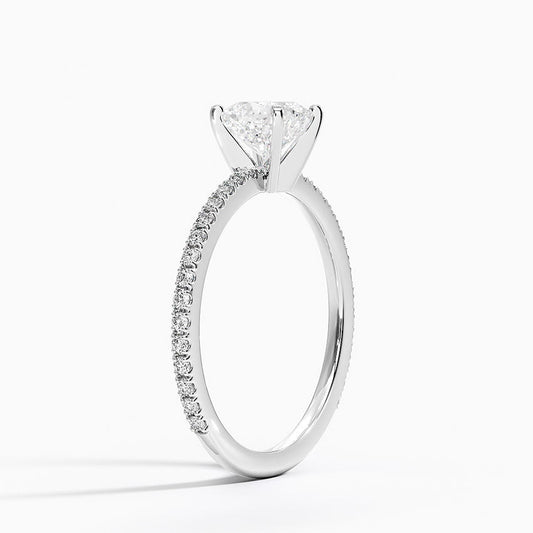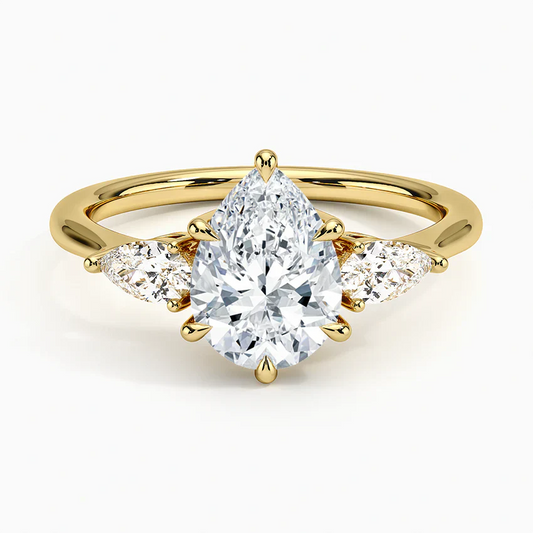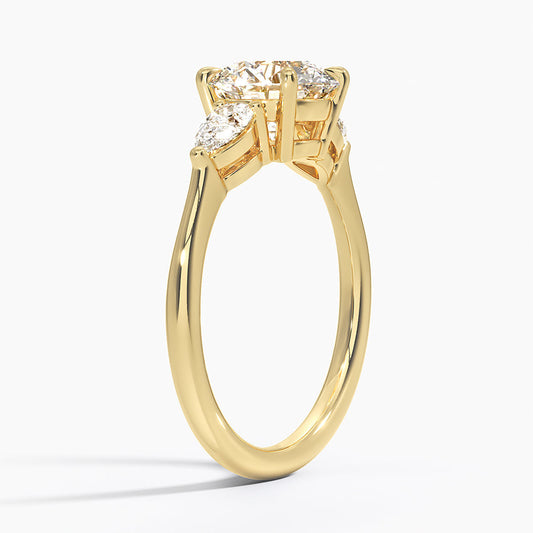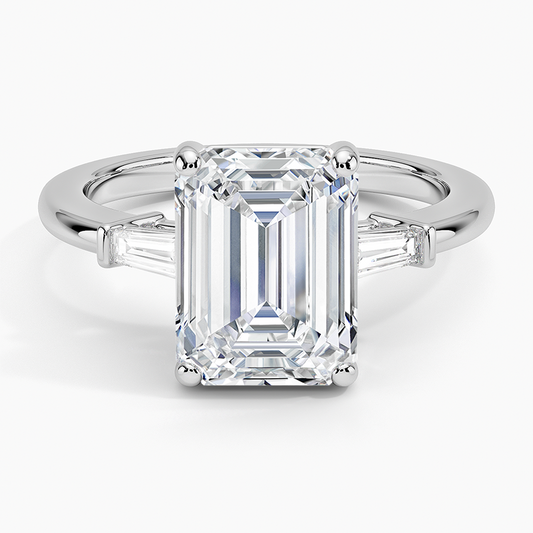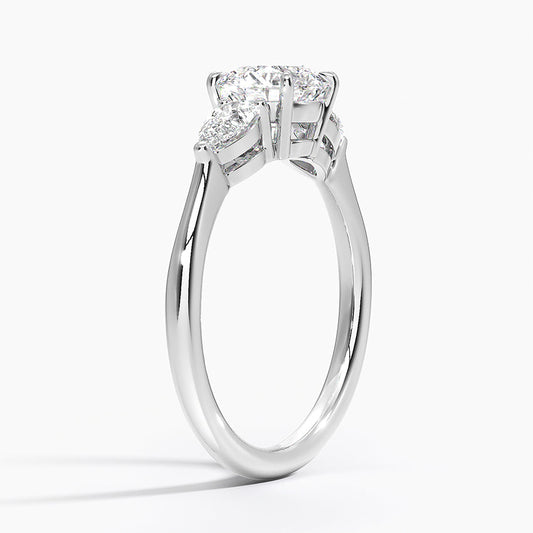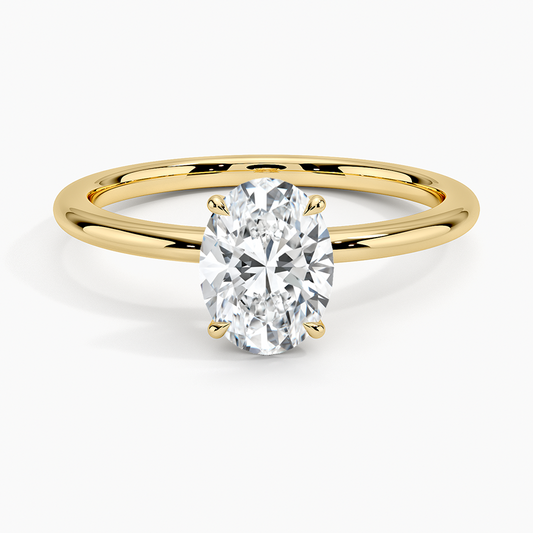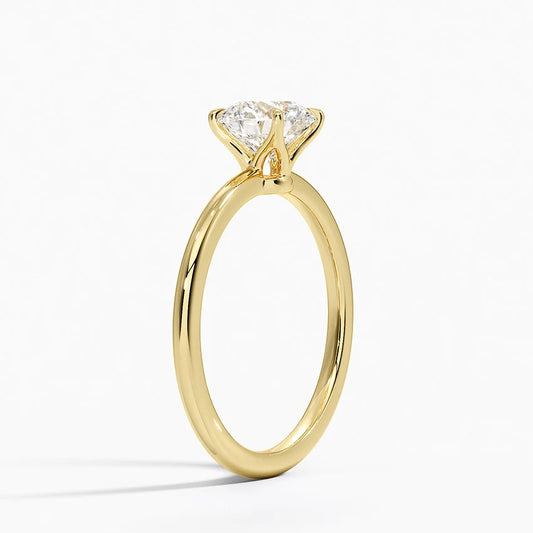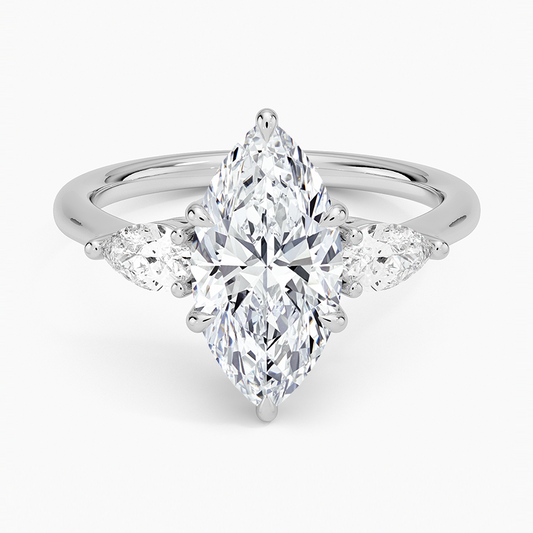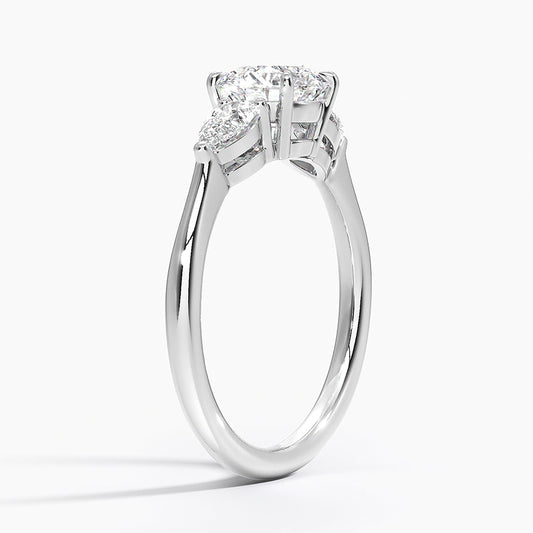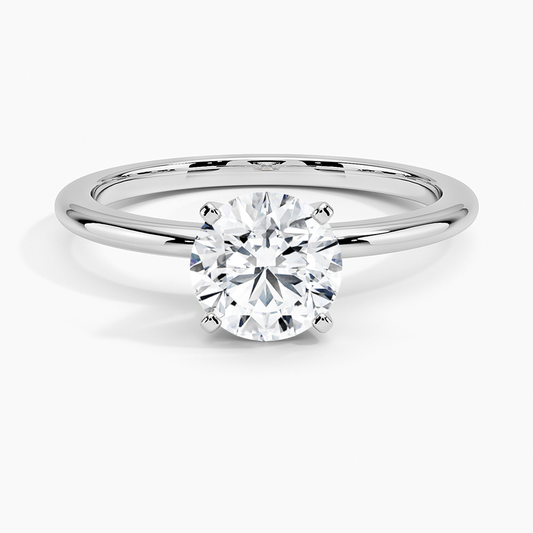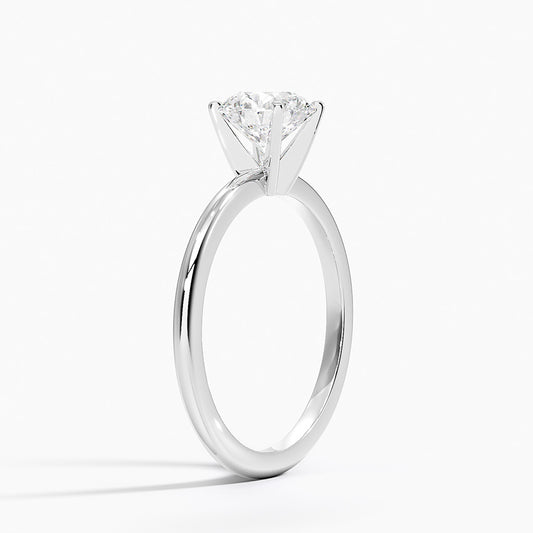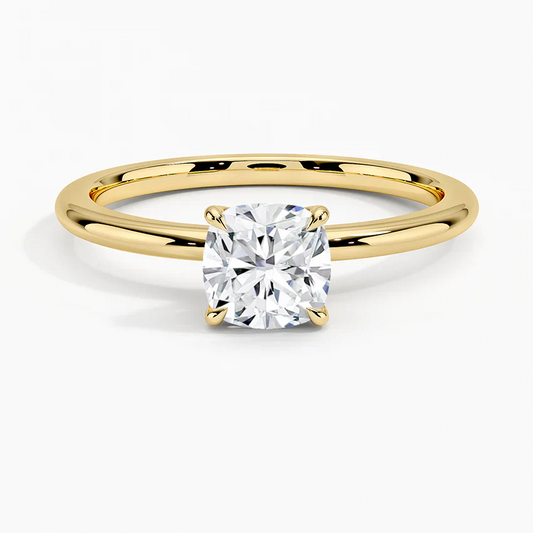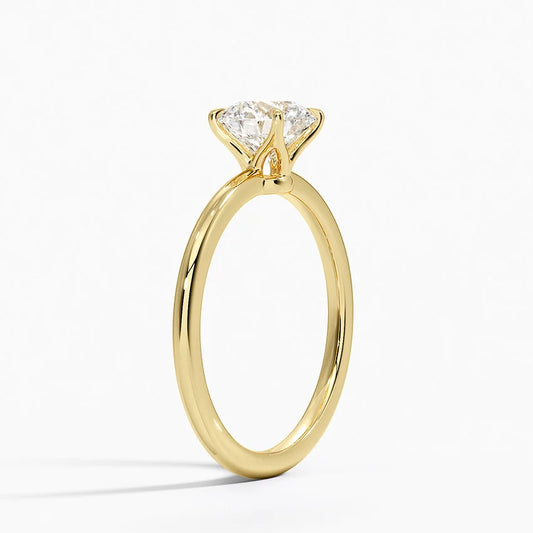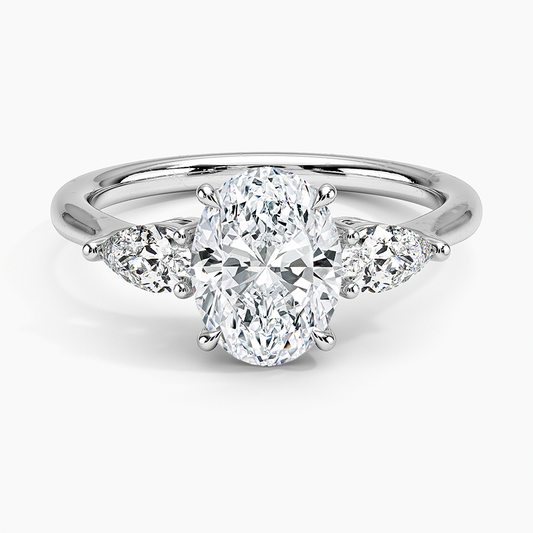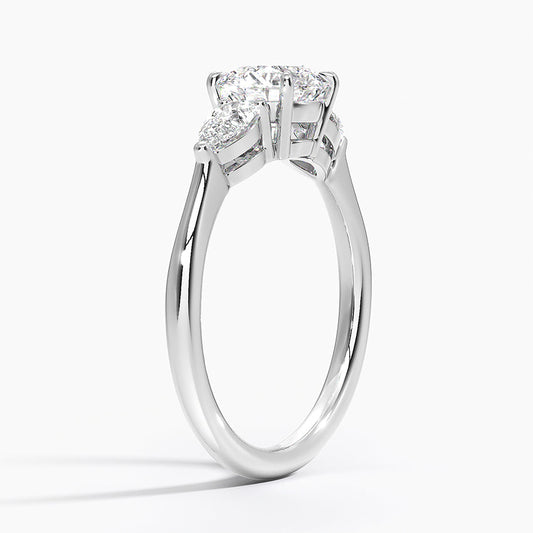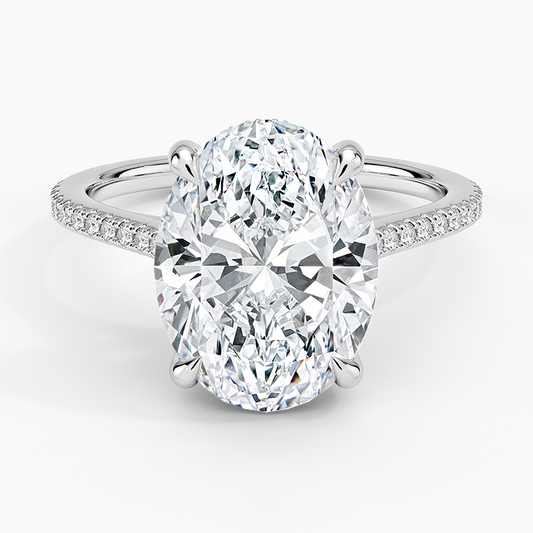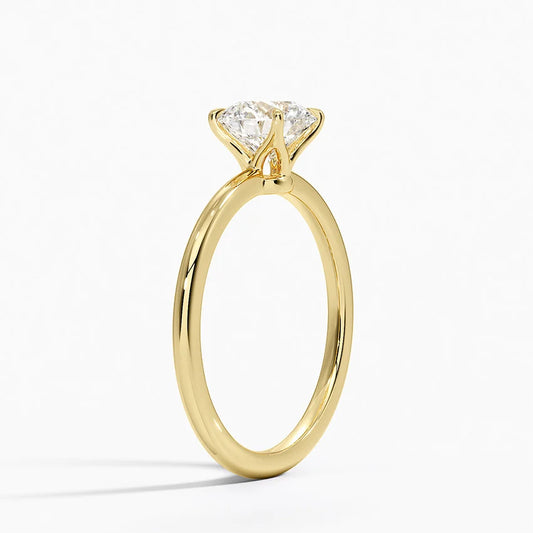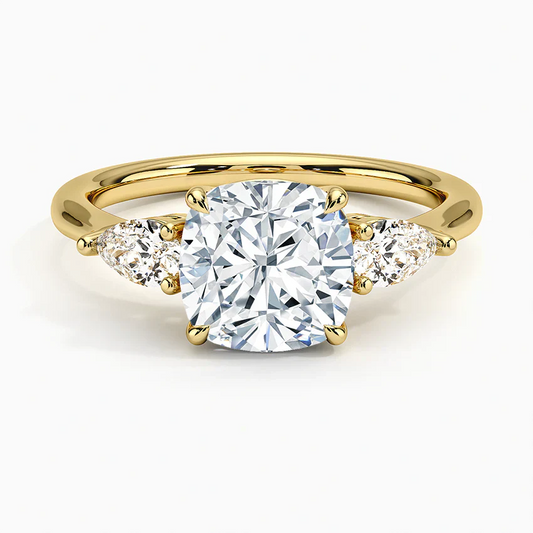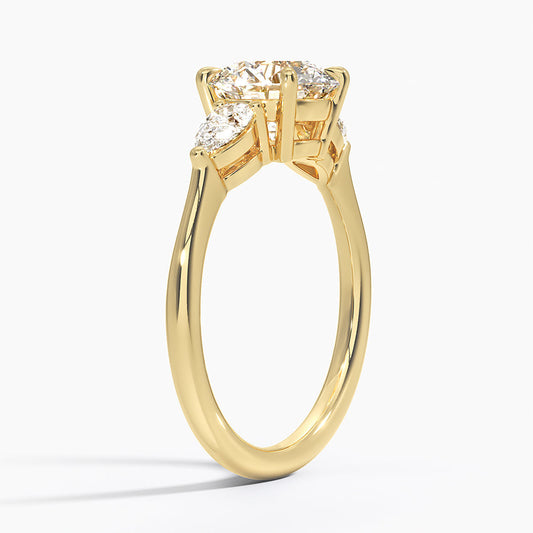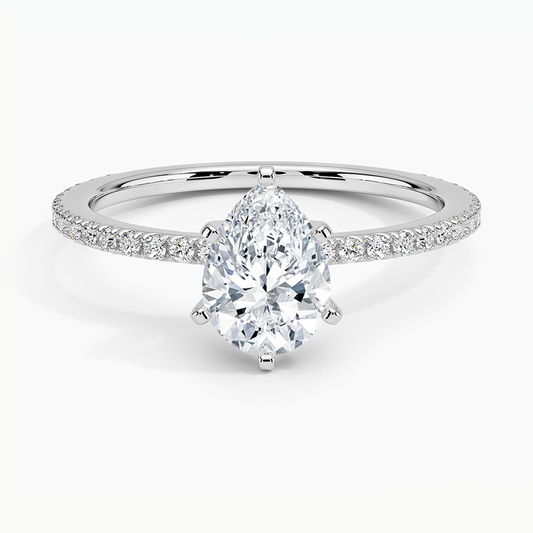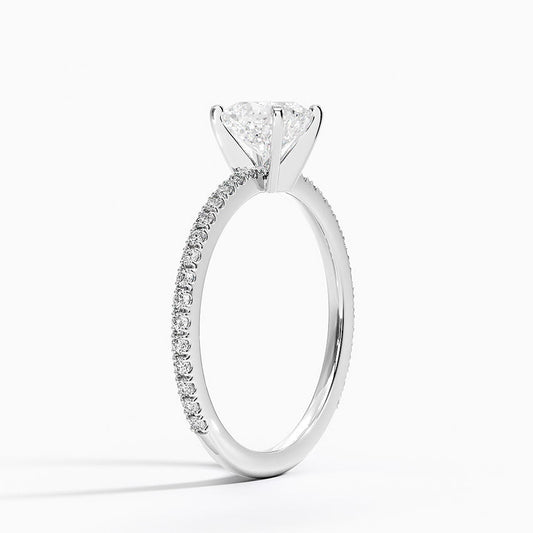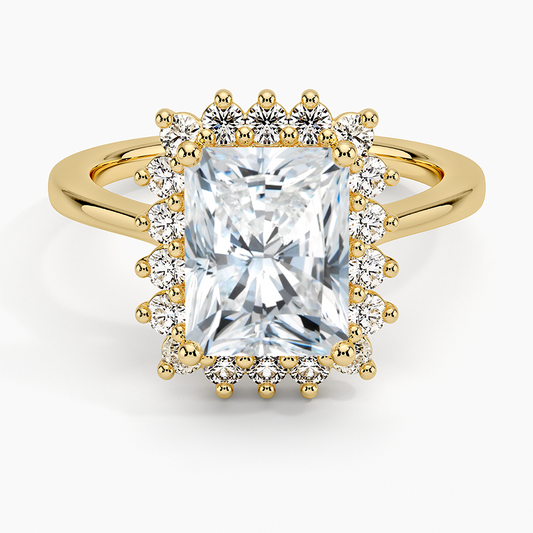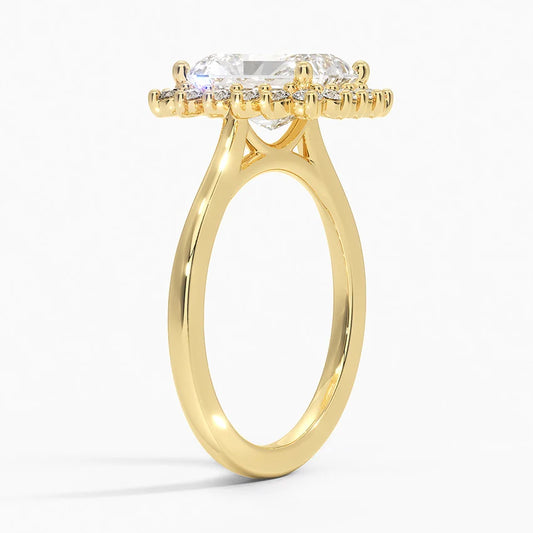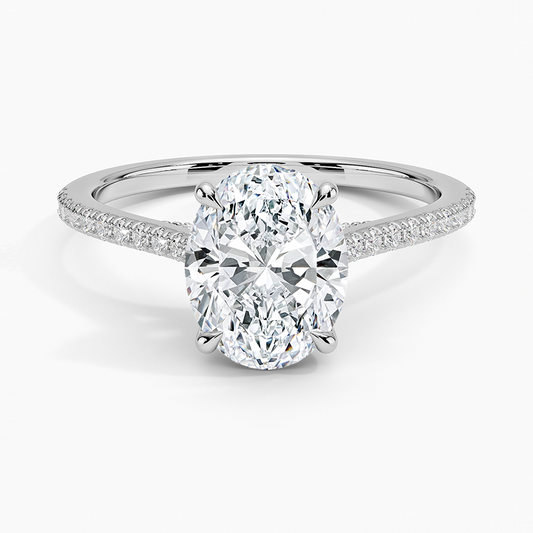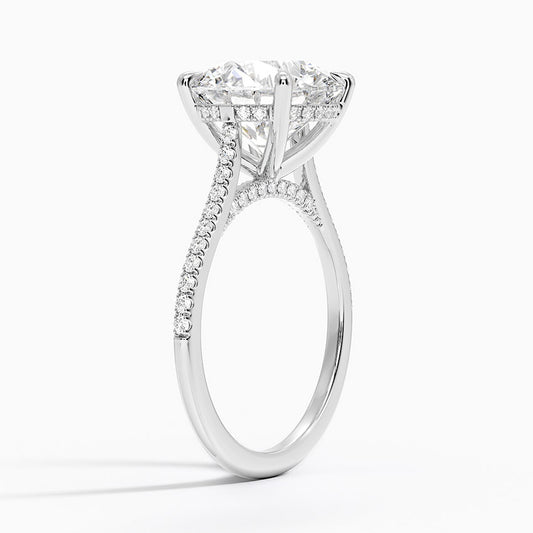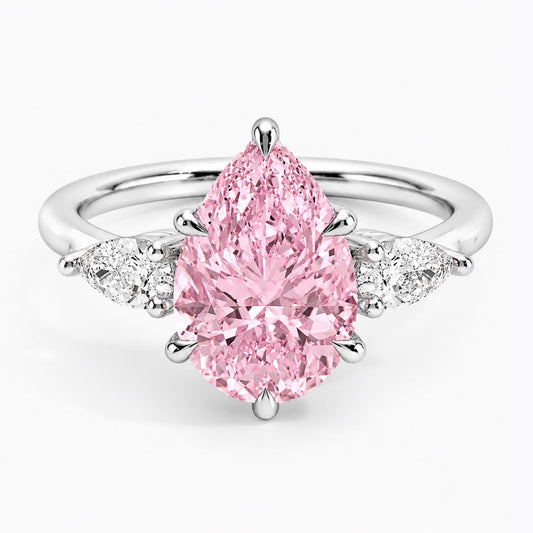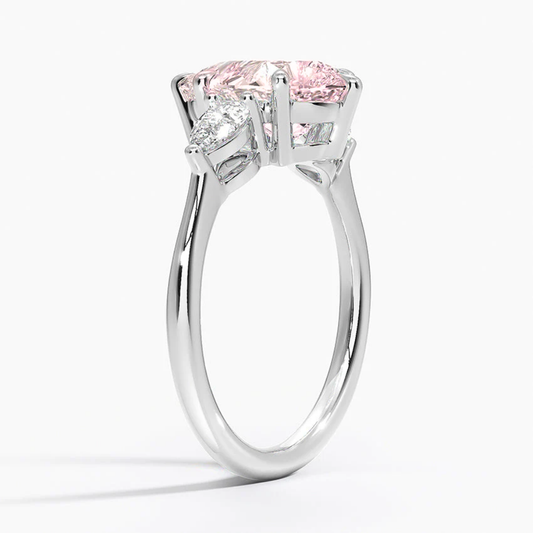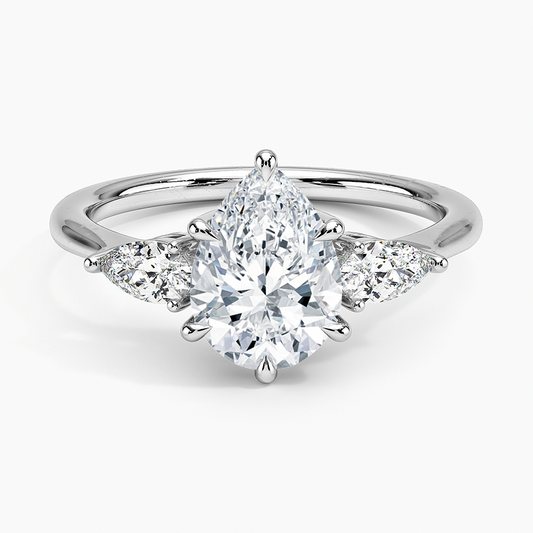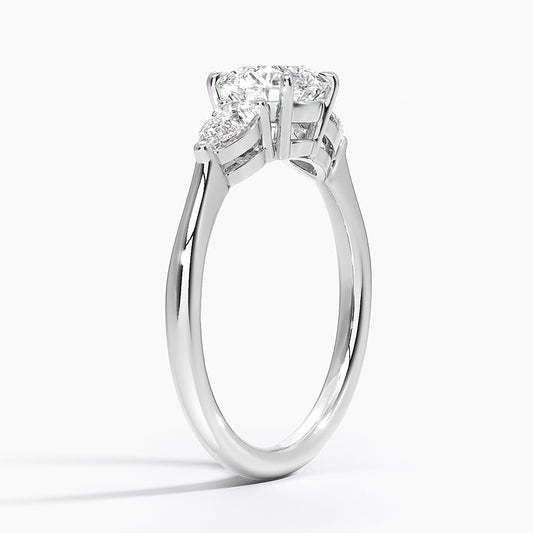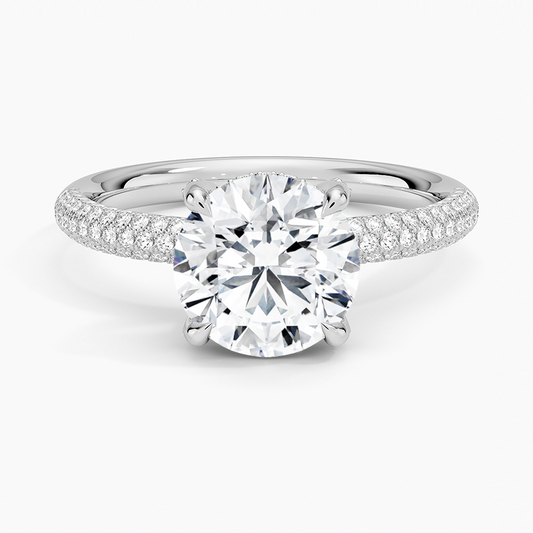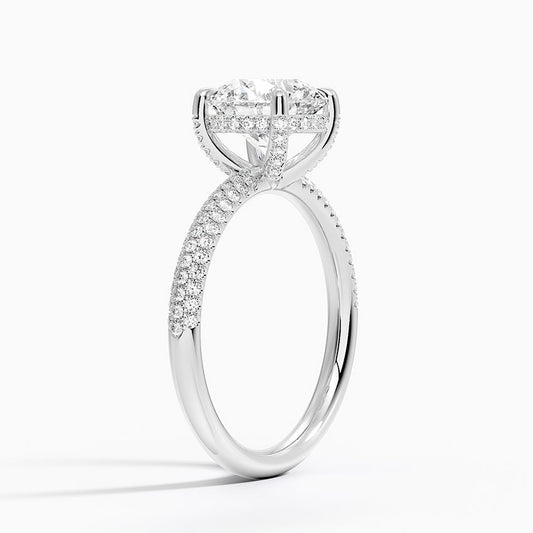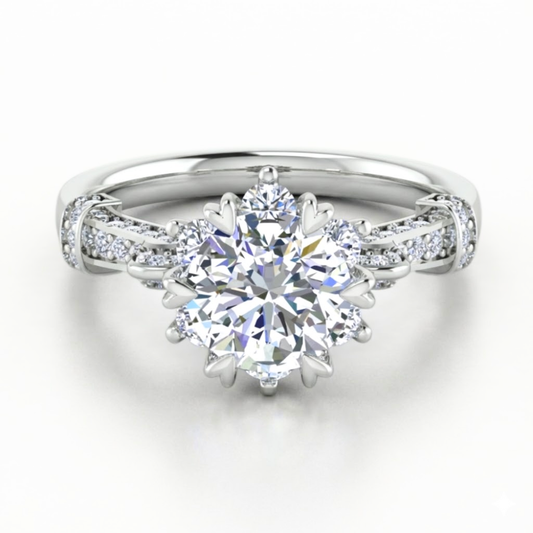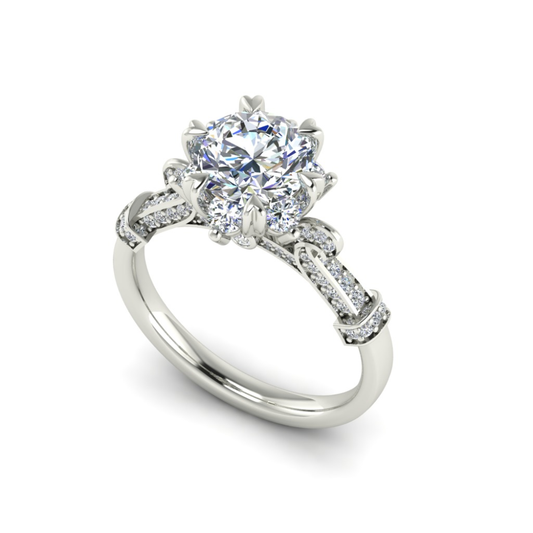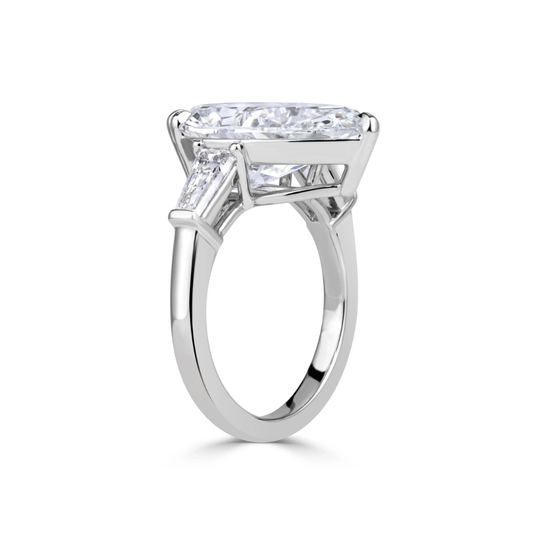
Round, oval, emerald, pear — every diamond shape has its own personality. This guide breaks down all 10 key diamond shapes, clears up the shapes vs. cut confusion, and helps you find the one that's right for you.
The 10 Key Diamond Shapes: A Complete Guide
Round, oval, emerald, pear — every diamond shape has its own personality. This guide breaks down all 10 key diamond shapes, clears up the shapes vs. cut confusion, and helps you find the one that's right for you.
TDO Editorial
In this Guide:
In this Guide:
1. Diamond Shape vs. Cut — What's the Difference?
This is one of the most common points of confusion in the diamond world — and it's completely understandable, because the two terms are used interchangeably all the time, even by jewellers.
Here's the simple version:
Shape is the outline of the diamond — what it looks like from above. Round, oval, pear, heart. That's shape.
Cut is about how well the diamond has been faceted — the precision of its angles, proportions, and symmetry, and how effectively it reflects light back to your eye. Cut is what determines sparkle. A poorly cut round diamond will look dull and lifeless. A beautifully cut one will dazzle.
So when someone says "I want an emerald cut diamond," they're actually describing the shape. The cut quality of that emerald-shaped diamond is a separate consideration entirely.
The 4 Cs of diamonds (Cut, Colour, Clarity, Carat) apply to every shape. But cut is the one C that has the biggest impact on how beautiful a diamond looks in real life — regardless of shape.
One more nuance worth knowing: round brilliant diamonds have standardised cut grades from the GIA. For all other shapes — called fancy shapes — there is no official GIA cut grade, so you'll rely more on the stone's proportions, polish, symmetry, and how it looks to the eye.
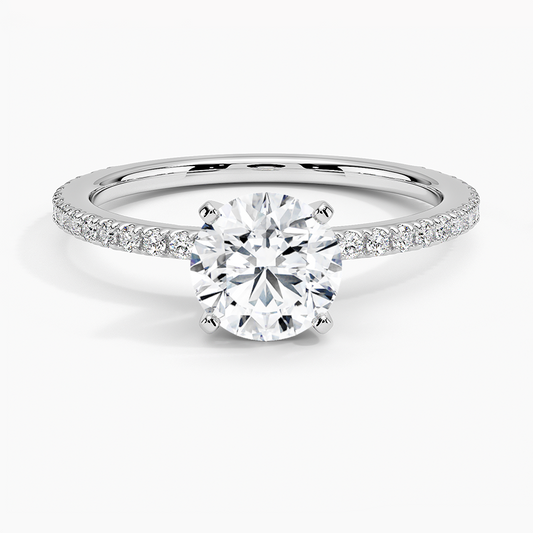
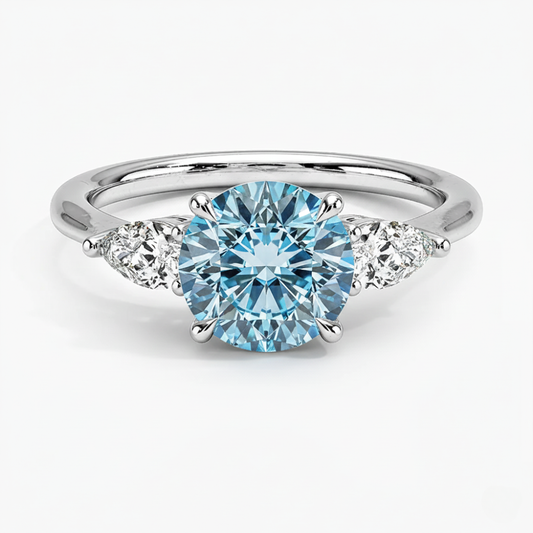
2. Round Diamond — The Most Brilliant Shape
The round brilliant diamond is the world's most popular diamond shape — and it's been that way for over a century. It was developed using mathematical principles to maximise the way light enters, reflects, and exits the stone. With 58 precisely angled facets, it produces more brilliance and fire than any other shape.
Round diamonds are also the most standardised. Because they have an official GIA cut grade, you can compare two round diamonds objectively — which makes shopping more transparent.
They're universally flattering, endlessly versatile, and the safest choice if you're buying for someone else and want to be sure they'll love it.
The one trade-off: round diamonds are the most expensive shape per carat. The cutting process wastes more of the rough stone than any other shape, and demand is consistently high — both of which push prices up.
Best for: Anyone who wants maximum sparkle and a look that will never go out of style.
Discover Ring Styles
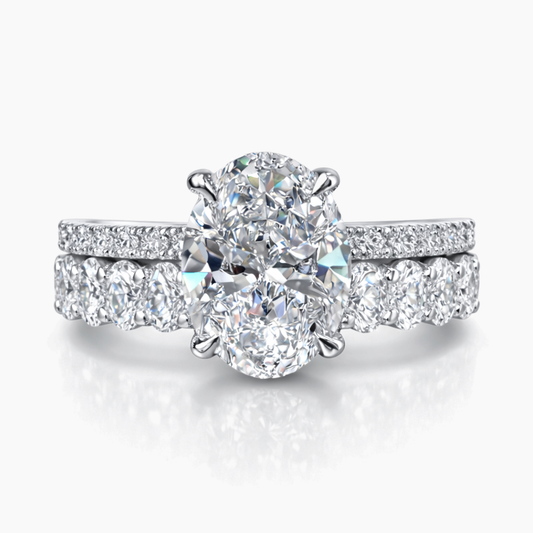
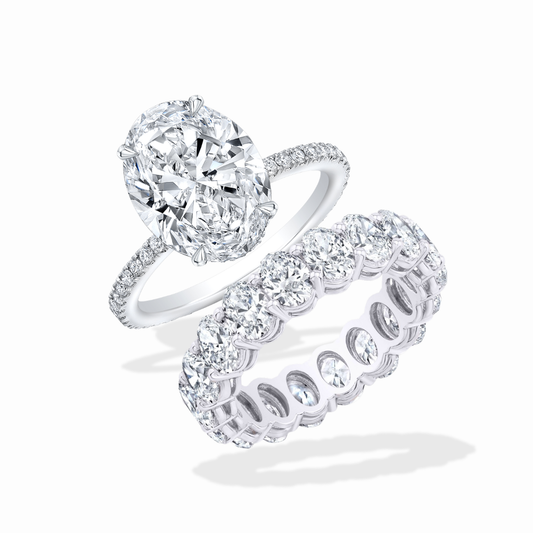
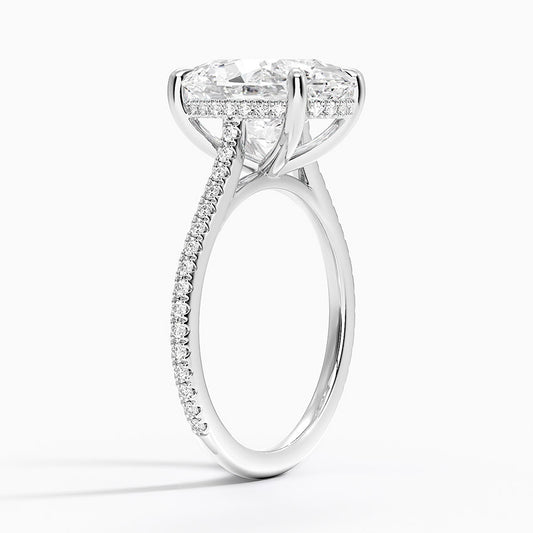
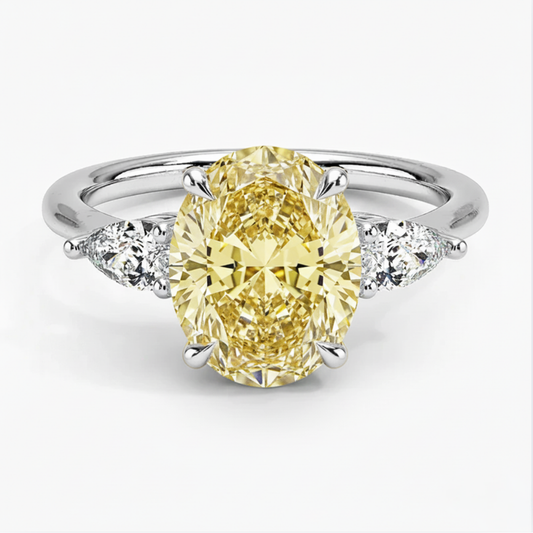
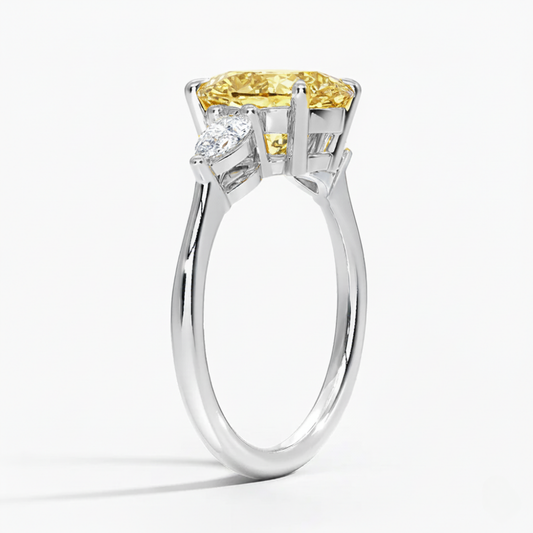
3. Oval Diamond — Elegant and Elongated
The oval diamond has become one of the most sought-after shapes in recent years — and once you see it on a hand, it's easy to understand why.
It has all the brilliance of a round diamond — the same style of faceting, the same fiery sparkle — but in an elongated outline that sits differently on the finger. That elongation creates one of the most flattering effects in jewellery: it makes the finger appear longer and slimmer, and makes the diamond itself look larger than a round of the same carat weight.
Oval diamonds are also typically priced lower per carat than rounds, which means you can often get a noticeably bigger-looking stone for the same budget.
One thing to be aware of: some oval diamonds show what's called a bow-tie — a dark shadow running across the centre of the stone. A slight bow-tie is normal and barely noticeable in most stones; a strong one will visibly affect the beauty of the diamond. Always view the stone in person or on video before buying.
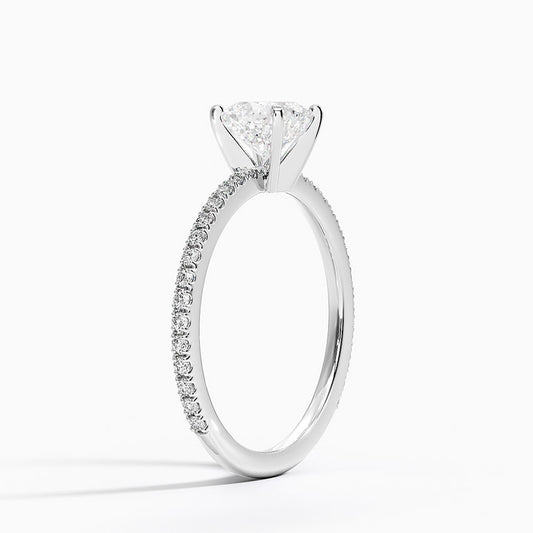
4. Cushion Diamond — Soft and Romantic
The cushion diamond gets its name from its shape: a square or rectangular outline with softly rounded corners, like a pillow. It's one of the oldest diamond shapes in existence — the dominant shape for centuries before the round brilliant was developed — and it has a warmth and vintage character that modern shapes don't quite replicate.
There are two main varieties: the standard cushion, which produces large chunky flashes of light with a more antique look, and the cushion brilliant, which has a rounder more sparkling light pattern. They look noticeably different in person, so it's worth seeing both.
Cushion diamonds tend to retain more colour than rounds, which means you may want to go slightly higher on the colour scale. On the upside, they're excellent at hiding inclusions, and they're generally priced more accessibly than rounds.
Best for: Those drawn to romantic, vintage aesthetics who want a soft, distinctive shape.
5. Emerald Diamond — Sleek and Sophisticated
The emerald diamond is in a category of its own. Unlike brilliant-cut shapes engineered for maximum sparkle, the emerald cut is a step cut — its facets run in long parallel lines down the stone like the steps of a staircase. The effect is a cool glassy shimmer: wide flashes of light that move slowly across the stone, rather than the rapid fire of a brilliant cut.
It's a deeply sophisticated look. Quiet, confident, and architectural. Many of the most iconic engagement rings in history have been emerald cuts — and they suit strong minimal settings that let the diamond speak for itself.
The open table means inclusions and colour tints are more visible in an emerald cut than in brilliant shapes. This shape rewards a higher clarity grade — VS2 or above is generally recommended — and a colour grade of H or better.
Best for: Those who love clean lines, understated elegance, and a diamond that makes a statement through presence rather than sparkle.
6. Princess Diamond — Bold and Brilliant
The princess diamond is the most popular square diamond shape, and the second most popular overall after round. Developed in the 1980s, it combines a geometric square outline with brilliant-cut faceting — meaning you get sharp modern lines and high-energy sparkle in the same stone.
Unlike the emerald and Asscher which are step cuts with a quieter shimmer, the princess cut fires light in every direction. It has a graphic contemporary quality that suits sleek solitaire settings and modern pavé bands particularly well.
One thing to note: princess diamonds have pointed corners which can be vulnerable to chipping if knocked. A four-prong setting that protects each corner is generally recommended.
Princess diamonds are also typically less expensive per carat than round diamonds — a useful advantage if you want brilliant sparkle with slightly more finger coverage.
Best for: Those who want brilliant sparkle in a bold, modern, geometric outline.
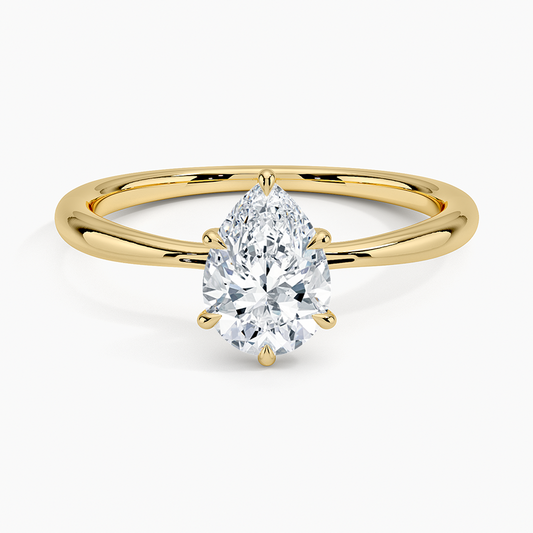
7. Pear Diamond — Graceful and Distinctive
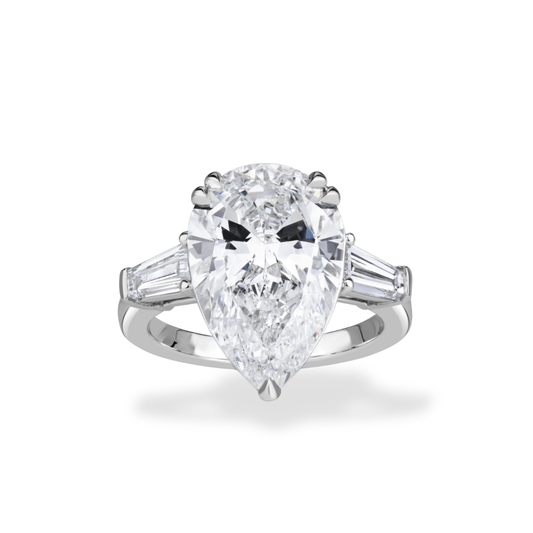
The pear diamond — also called a teardrop diamond — combines a rounded base with a single pointed tip, creating one of the most graceful and distinctive silhouettes in fine jewellery. It's a brilliant cut, so it produces excellent sparkle, and its elongated shape gives it the same finger-lengthening effect as the oval.
The pointed end is always worn facing the fingernail — this creates the most elegant look. The point draws the eye upward, elongating the finger and making the diamond appear larger than its carat weight.
Like the oval, pear diamonds can show a bow-tie effect across the centre. A well-cut pear will minimise this; a poorly cut one will have a visible dark shadow. Always assess the stone carefully before purchasing.
Pear diamonds work beautifully in a range of settings — east-west solitaires, halos, and three-stone rings. They also make stunning pendants.
Best for: Those who want something graceful and distinctive, with a strong elongating effect on the hand.
8. Asscher Diamond — Vintage and Geometric
The Asscher diamond was created by the Royal Asscher Diamond Company in Amsterdam in 1902, and it has been synonymous with Art Deco glamour ever since. Like the emerald cut, it's a step cut — but square rather than rectangular, with a deeper pavilion and more concentric rows of facets.
Look straight down through an Asscher diamond and you'll see a distinctive windmill or X pattern at its centre — a hallmark of the shape that makes it instantly recognisable. The light return is a hypnotic series of flashes that travel through the stone like a hall of mirrors.
Because it's a step cut with a large open table, inclusions and colour are more visible — so a higher clarity grade (VS2 and above) and a colour grade of H or better are recommended.
Asscher diamonds suit vintage-inspired settings, particularly those with milgrain details, intricate shoulders, or Art Deco geometric motifs.
Best for: Those who love vintage aesthetics, strong geometry, and a diamond with real historical character.
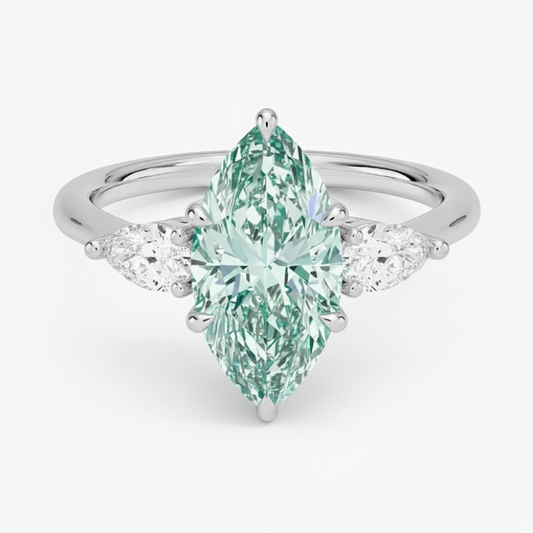
9. Marquise Diamond — Dramatic and Elongated
The marquise diamond has one of the most dramatic silhouettes in the diamond world — a long narrow shape with pointed ends at both sides, like a boat or an eye. It was reportedly commissioned by King Louis XV of France, and it has carried a sense of drama and romance ever since.
The marquise is one of the most efficient shapes for appearing large. Its elongated form covers more surface area on the finger than almost any other shape at the same carat weight, and its two pointed ends create a strong visual extension that makes fingers look exceptionally long and slender.
Marquise diamonds are brilliant cut, so they produce high levels of sparkle. Like oval and pear shapes, they can show a bow-tie shadow across the centre — so the quality of the cut matters significantly.
The pointed tips require protection in the setting. V-prong tips are the most secure and widely used. East-west orientations have also become a popular modern styling choice.
Best for: Those who want a bold maximalist look and a diamond that commands attention.
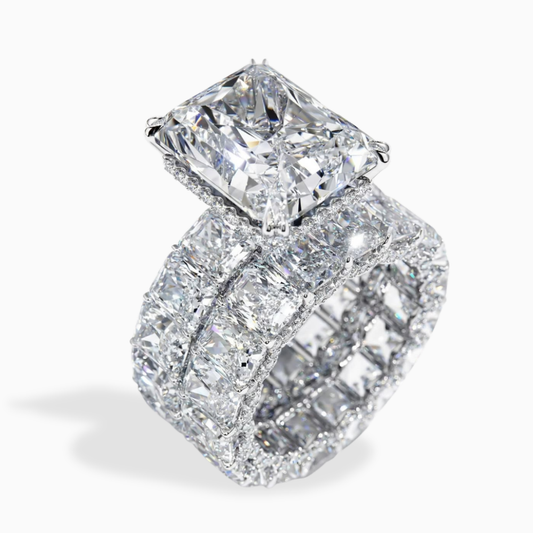
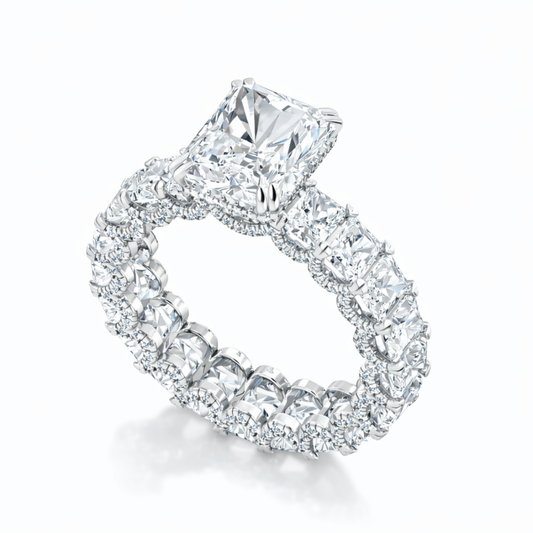
10. Radiant Diamond — Brilliant in Every Angle
The radiant diamond was developed in 1977 as the first non-round diamond to feature a complete brilliant-cut facet pattern. The result is a rectangular or square outline — with trimmed corners like the emerald — combined with the high-energy sparkle of a brilliant cut. It's genuinely the best of both worlds.
Where the emerald cut produces long quiet flashes of light, the radiant blazes. Its many facets scatter light in every direction, creating a dense lively sparkle that fills the stone from edge to edge. It's also one of the best shapes for hiding inclusions and tolerating slightly lower colour grades.
Radiant diamonds suit both modern and vintage-style settings, work beautifully with tapered baguette side stones, and are an excellent choice if you love the geometric look of an emerald but want significantly more fire and sparkle.
Best for: Those who want a geometric shape with brilliant-cut sparkle — the ideal middle ground between emerald and round.
11. Heart Diamond — The Most Romantic Shape
The heart diamond is the most overtly romantic shape in fine jewellery — a brilliant-cut diamond fashioned into the universal symbol of love, with a cleft at the top and two symmetrical rounded lobes.
Cutting a heart diamond requires exceptional skill. The two lobes must be perfectly symmetrical, the cleft must be sharp and well-defined, and the overall outline must be balanced. The quality of the cut makes an enormous difference — a poorly proportioned heart can appear lopsided or undefined.
For the heart shape to read clearly, a minimum carat weight of around 0.50ct is recommended. A three-prong setting — one prong at each lobe and one at the point — or a bezel setting are the most popular choices.
Heart diamonds work beautifully as pendants and solitaire rings, and make a particularly meaningful choice for an engagement ring or anniversary gift.
Best for: Those who want to wear their sentiment on their hand — unapologetically romantic and entirely personal.
12. How to Choose the Right Diamond Shape
With ten shapes to choose from, the decision can feel daunting — but in practice, most people find that one or two shapes feel instinctively right when they see them. Here's how to narrow it down.
Follow personal style first. Look at the jewellery the person already wears. Classic and delicate pieces suggest a round or oval. Vintage-inspired pieces point to cushion or Asscher. Bold architectural jewellery suggests emerald or princess. Statement pieces point to marquise or pear.
Think about the hand. Elongated shapes — oval, pear, marquise, radiant, emerald — all create a lengthening effect on the finger. Rounder and squarer shapes — round, cushion, princess — sit more compactly on the hand.
Consider your budget. Fancy shapes are almost always less expensive per carat than round diamonds. An oval or radiant of the same carat weight as a round will usually cost meaningfully less — and may actually appear larger on the hand.
Don't overlook diamond fluorescence. In step-cut shapes with large open tables — emerald and Asscher especially — fluorescence can affect the appearance of the stone under certain lighting.
And always look at the 4 Cs through the lens of your chosen shape. Each shape has different strengths and sensitivities when it comes to colour, clarity, and cut quality.
In Summary
Every diamond shape tells a different story. The round is timeless. The oval is effortlessly elegant. The emerald is quietly powerful. The marquise is bold and dramatic. The cushion is warm and romantic. The heart is unapologetically sentimental. There's no wrong answer — only the shape that feels like the right one for you. Take your time, explore the options, and don't hesitate to reach out to our team if you'd like guidance. The perfect diamond is the one you'll never want to take off.
Frequently Asked Questions
What is the difference between diamond shape and diamond cut?
Shape refers to the outline of the diamond — round, oval, pear, and so on. Cut refers to how well the diamond has been faceted and how effectively it reflects light. A diamond can be round in shape but have a poor cut quality.
Which diamond shape looks the biggest?
Marquise, oval and pear diamonds appear the largest relative to their carat weight because their elongated outlines cover more finger surface area. They can look noticeably larger than a round diamond of the same carat weight — making them a smart choice if size matters to you.
Which diamond shape has the most sparkle?
The round brilliant has the most sparkle of any shape — it was mathematically engineered for maximum light return. Oval, cushion, pear, marquise, radiant and princess are also brilliant cuts with high sparkle. Emerald and asscher produce a quieter, glassy shimmer.
Which diamond shape is best for an engagement ring?
There is no single best shape — it comes down to personal style, hand shape and budget. Round is the most classic and universally flattering. Oval is the most popular alternative right now. Cushion suits vintage styles. Emerald suits those who love minimalist elegance. The best shape is simply the one that feels right when you see it on your hand.
Which diamond shape is best for hiding inclusions?
Brilliant-cut shapes — round, oval, cushion, radiant and marquise — are the best at concealing inclusions because their many facets scatter light. Step-cut shapes like emerald and Asscher have large open tables that make inclusions more visible, so a higher clarity grade is recommended for those shapes.
Discover Most Loved Rings
Oval Pave and Oval Eternity Lab Diamond Ring Set in 18K Gold
Oval Pave and Oval Eternity Ring Set | 18K White Gold | Lab Grown Diamond | Oval | From 3 ct. tw.
From
Dhs. 0.00 AED
Dhs. 9,650.00 AED
11 Carat Set of Jana Eternity Radiant (7 ct. tw.) + Radiant Eternity (4 ct. tw.) Lab Diamond Rings in White Gold 18K | IGI and SGL certificates
11 Carat Jana Eternity 2 Rings Set | 18K White Gold | Lab Grown Diamond | Radiant | 11 ct
Dhs. 28,000.00 AED
Dhs. 26,000.00 AED
Trilogy Ring
Trilogy | 18K Yellow Gold | Lab Grown Diamond | Pear | From 1 ct
From
Dhs. 0.00 AED
Dhs. 4,500.00 AED
Trilogy Ring
Trilogy | 18K White Gold | Lab Grown Diamond | Emerald | From 1 ct
From
Dhs. 0.00 AED
Dhs. 4,500.00 AED
Solitaire Ring
Solitaire Ring | 18K Yellow Gold | Lab Grown Diamond | Oval | From 1 ct
From
Dhs. 0.00 AED
Dhs. 4,000.00 AED
Trilogy Ring
Trilogy | 18K White Gold | Lab Grown Diamond | Marquise | From 1 ct
From
Dhs. 0.00 AED
Dhs. 4,500.00 AED
Solitaire Ring
Solitaire Ring | 18K White Gold | Lab Grown Diamond | Round | From 1 ct
From
Dhs. 0.00 AED
Dhs. 4,000.00 AED
Solitaire Ring
Solitaire Ring | 18K Yellow Gold | Lab Grown Diamond | Cushion | From 1 ct
From
Dhs. 0.00 AED
Dhs. 4,000.00 AED
Trilogy Ring
Trilogy | 18K White Gold | Lab Grown Diamond | Oval | From 1 ct
From
Dhs. 0.00 AED
Dhs. 4,500.00 AED
4 ct. Oval Lab Diamond Hidden Halo 3/4 Diamonds Pave Setting White Gold 18K
Pave + Hidden Accents | 18K White Gold | Lab Grown Diamond | 4 ct
Dhs. 0.00 AED
Dhs. 16,000.00 AED
Solitaire Ring
Solitaire Ring | 18K Yellow Gold | Lab Grown Diamond | Pear | From 1 ct
From
Dhs. 0.00 AED
Dhs. 4,000.00 AED
Trilogy Ring
Trilogy | 18K Yellow Gold | Lab Grown Diamond | Cushion | From 1 ct
From
Dhs. 0.00 AED
Dhs. 4,500.00 AED
Vintage Halo Lab Grown Diamond Engagement Ring in 18k Gold - Radiant
Halo Ring | 18K White Gold | Lab Grown Diamond | Radiant | From 1 ct
From
Dhs. 0.00 AED
Dhs. 4,400.00 AED
2 ct. Oval Lab Diamond Hidden Halo Cathedral Half Pave Setting 18K White Gold
Pave + Hidden Accents | Cathedral | 18K White Gold | Lab Grown Diamond | 2 ct
Dhs. 0.00 AED
Dhs. 8,300.00 AED
Trilogy Fancy Colored Lab Diamond Ring (Pear Side Diamonds) in White Gold 18K
Trilogy (Pear Sides)| 18K White Gold | Lab Grown Diamond | Pink Pear | From 1 ct
From
Dhs. 0.00 AED
Dhs. 5,000.00 AED
Trilogy Ring
Trilogy | 18K White Gold | Lab Grown Diamond | Pear | From 1 ct
From
Dhs. 0.00 AED
Dhs. 4,500.00 AED
3-sided Pave Hidden Halo Lab Diamond Ring
3-sided Pave Hidden Halo Ring | 18K White Gold | Lab Grown Diamond | From 1 ct
From
Dhs. 0.00 AED
Dhs. 4,500.00 AED
Mariette Unique Round Lab Diamond 18K Gold Ring
Unique | 18K White Gold | Lab Grown Diamond | Round | From 1 ct
From
Dhs. 0.00 AED
Dhs. 4,400.00 AED
Trilogy Fancy Colored Lab Diamond Ring (Pear Side Diamonds) in White Gold 18K
Trilogy (Pear Sides)| 18K White Gold | Lab Grown Diamond | Yellow Oval | From 1 ct
From
Dhs. 0.00 AED
Dhs. 5,000.00 AED
Trilogy Fancy Colored Lab Diamond Ring (Pear Side Diamonds) in White Gold 18K
Trilogy (Pear Sides)| 18K White Gold | Lab Grown Diamond | Blue Round | From 1 ct
From
Dhs. 0.00 AED
Dhs. 5,000.00 AED
Trilogy Fancy Colored Lab Diamond Ring (Pear Side Diamonds) in White Gold 18K
Trilogy (Pear Sides)| 18K White Gold | Lab Grown Diamond | Green Marquise | From 1 ct
From
Dhs. 0.00 AED
Dhs. 5,000.00 AED
Trilogy Tapered Baguette Sides Lab Grown Diamond Engagement Ring in 18k Gold - Pear
Trilogy | 18K White Gold | Lab Grown Diamond | Pear | From 4 ct
From
Dhs. 23,000.00 AED
Dhs. 13,800.00 AED
Learn More About Diamonds
Diamond Carat Size Guide: What Buyers Actually Need to Know
Carat is the most searched diamond term — and the most misunderstood....
The 4 Cs of Diamonds: Carat, Cut, Color, Clarity
Not sure what cut, color, clarity, and carat actually mean when buying...
Diamond Fluorescence — Does it Matter?
Learn about diamond fluorescence, a natural occurrence when a diamond emits a...